Tuesday, October 15, 2013

Tuesday Tales

Every week, or as close to that as I can manage, I will be posting a short story, or a part of one at the least.  The point of this is to keep me writing constantly.  In November, I will be busy with National Novel Writing Month, so I'll not need it then, but for now Tuesdays are officially Taledays.  I welcome any and all to participate in the Tuesday Tales exercise, post a comment with a link to the story (be it on a blog, forum, or what have you).  For this Tuesday, I'll be posting the full first chapter of Nightmares in the Past, a fanfiction based in the Star Wars universe several thousand years before the "Clone Wars", and what you might commonly think of when you hear the words Star Wars.

This tale is focused on Kian Shekk, at the time a seven year old boy.  Innocent, naive, and the rest you'll see.
(I've divided it into two parts so that, if you've read the first part already, you can easily skip to the second.)

Part 1, Chapter 1.

Kian giggled and raced after the darting girl.  The green and tan walls around blurred past into a splash of color, sweat beaded on his forehead and he struggled for breath.  But he wouldn’t stop.  He wouldn’t let a girl beat him - least of all Kim.
       His youthful scream echoed down the hall as Kian struggled to gain ground on his playmate.  Kim was sly and swift, while Kian much taller and thicker, yet still the frame of a seven-year-old.  Around sharp corners and narrow passageways they dashed - startling the troubled old Jedi pondering around the halls as they flew past.
       But it wouldn’t last - not with Kian’s reputation on the line!  He bit his lip and surged forward, bringing to mind his father’s often repeated words.  Use the Force, Kian, use the Force.  He reached deep within, ignoring the physical exertion of the moment.  He fumbled for the inner feeling - then suddenly his body sprang to life with new vigor.  His feet hardly touched the floor as he shot ahead, cutting corners close and making quick work of long halls and steep stairs.
       Kim shrieked, just as Kian leapt forward and tackled her to the ground.
       “Aha!”  He laughed, a pompous grin spreading over his childish face as he rolled off of Kim.  “I gotcha!”
       Kim pushed Kian further with a mock frown.  “Cheater,” she murmured, yet couldn’t contain the giggles rising up within herself.
       Kian shook his head, suddenly solemn.  “Nuttuh!  I won-ed fairly-and-squarely!”
       Kim opened her mouth to protest - but only a squeak came out, and she froze like a rock.  She quickly lifted herself off the ground, dusting her robes, and straightened, her face a mask of complete soberness.
       Kian scrambled to his feet as well, for though he had not seen what caused the change of attitude in his friend, he knew immediately the only Jedi that could put a happy girl to shame without a single word uttered.  Kian hung his head as he stood perfectly straight before the glaring eyes above.
       “Sorry, Master Djo,” Kian and Kim echoed.
       Kian didn’t dare raise his head, but out of the corner of his eye he could see Kim had.  She was staring straight up at the old Jedi.  Kian shivered.  He wouldn’t dare do that - Djo-im’s eyes were like bonfires, they raged uncontrollably, they scorched hearts and happiness alike.  Strict as the saber, the middle-aged Jedi was a stubborn, bold man - already on the Council as a Master.  Even Younglings knew Djo - they knew who he was, and who he wasn’t.  He wasn’t a kind, loving Jedi.  He was a master of war.  He wasn’t a man to be questioned by anyone but another Master on the Council - or Kian’s father.  He was an aggressive soldier - he was dangerous.  But not brute force alone.  Though strict to the Order, even Younglings knew Djo - they knew he reeked with danger.  He never shirked anything in war, possibly even to the extent of using the Dark Side . . .  But was it true?  A common rumor, yes, but he couldn’t be trusted if-
       Kian was wrenched out of his thoughts as Djo stepped forward, and, with the tips of his fingers, raised Kian’s chin.  “Kian,” his teeth snapped as he inspected the Youngling with his harsh voice and harsher eyes.  “Kian and Kim, go to your clan house immediately.  Do you know what could have happened if you were caught out here when the blast doors sealed?  The Sith are coming!”
       Kian and Kim’s eyes met worriedly.  Sith? their minds echoed in unison.
       Djo pushed the Younglings down the hall towards their clan house.  “The Sith, you hear?!  Move, move, move!”
       “Yes, Master Djo-im!” they murmured, already racing as fast as their weary feet could take them.  They exchanged fearful glances all the way back.  Something deep was amiss.
       At the clan house blast door, Kian’s father stood with shoulders thrown back and a powerful gaze extending over the room, dotted with other Jedi.  He smiled at his son and Kim as they came nearer.  He kneeled and patted their shoulders.  “There’re the rascals!  Now get inside quickly.”  His eyes fell upon Kian, and the blue fire in them seemed to sink to a dull grey.  “When in times of trouble, use the Force, Kian, use the Force.”
       Kian’s lips parted slightly, before his father slapped him on the shoulder reassuringly once more and disappeared into the midst of a group of other Jedi.  He stared after his father a moment longer.  Kim hesitated, but grabbed hold of Kian in a moment and pulled him inside the clan house room.  She didn’t notice his childish face creased with worry.

Part 2, Chapter 1.

A rumble, in the distance, yet so close.  Shots echoed far away, yet so near.  Kian shivered and huddled up against Master Kaleeth’s side.  What was happening out there, beyond those silver-blue blast doors?  The Sith were coming - the Sith.  Cruel, evil men, shrouded in darkness.  They were mysteries.  The Lightside showed, the Darkside hid.  Even old Master Ora said that.
       Another youngling whimpered, the old Master Kaleeth hugged the boy tight, shushing him comfortingly.  Kian glanced around the room.  Fear was rife in all of them, even Kian’s young seven year old eyes could see that.  All, that is, but in Kim.  She stood defiantly at the blastdoors, hands on her hips and a chin raised determinedly.
       Throwing back his shoulders and setting his jaw, Kian wobbled over to his friend at the doors.  They mutually stared at them for a moment, before Kian finally turned.  “What’s happening out there?”  His young voice was shaky and unsettled.
       Kim continued to stare forward.  “My cousin is out there.”
       “Padawan Ina?” Kian asked, looking at the doors with worry.
        Kim nodded.  “What if . . . what if something happened to her?”
        Kian’s eyes widened.  “Do you mean, like . . .?”  Death wasn’t a subject the Masters taught younglings.  But in times of war, it was always there.  It hung above, always there, always.
        Kim’s lower lip trembled.  Kian glanced over to her, and saw something in her big blue eyes.
        “We have to do something.”  She turned to him, staring hard.  His little understanding of the world was enough though - he could see a drastic flame in her eyes leap to life.
       “You mean, go out there?  D’you think that would be fun?” Kian asked.
       Kim crossed her arms, rearranging the youngling training lightsaber at her side.  “It’s not a question of fun or not fun.”
       “It isn’t?” Kian asked.  “Why would we go out there then?”  He glanced down at his own practice saber, his brow scrunching.
       Kim turned away from the doors.  “Because something bad is going on.  I once heard of an evil Sithman who destroyed an entire world with the squeeze of his hand while he was in a cockpit in space.”
      Kian gasped and glanced around the room feverishly.  “What?  Nuttuh!  No way!  Who was that guy?”  Was that true?  How could it be?
       “Darth Ohmy,” Kim replied with a fierce curve in her brow.
      “You mean Darth Yomar?”  Kian scratched his forehead.  “He didn’t crush a planet, I heard he just threw an asteroid into the capital city.”
       Kim made a throaty growl, but dismissed the subject.  Grabbing him by the hand, Kim then rushed into a hallway of the clan house that led into a circular room, one of the sleeping stations branching off that of the main clan house area.  It was the girl’s bedding room, lined with dozens of cots, dressers, mirrors, and some other necessities.  Kim glanced back to the main room, where the majority of younglings crowded around Kaleeth, who continued to comfort the children unbeknownst of Kian and Kim.
       Kim turned back, ran to a dresser, and started pulling it away from the wall.  Kian ran over to her.  “What’re you doing?”
       Kim pulled  a moment longer, before letting go of it and pointing behind the dresser, struggling to reclaim her breath.  “If you’d just help me, we could get to the vendilnation thing.”
       “It’s not called the vendilnation!” screeched Kian.  “I heard Ina say it was called the ventul-ation.”
       “My cousin isn’t dumb enough to call it that!” cried Kim.
       Kian gasped.  “Are you callin’ me dumb?!”
       “What?!” Kim cried.  “Why’d you think I did?  You’re my friend, I wouldn’t ever call you that.”
       “Because, well . . .”  Kian cocked his eyebrow and tilted his head.
       Kim growled and grabbed him by the shoulder, then rushed behind the dresser and ducked under the low rim of the ventilation pipe.
        Kian giggled and squirmed with excitement.  “Just like in the good stories!”  He followed after Kim, falling to all fours as he entered the super secret passageway - of sorts.
        They continued further in until Kim decided that they were a good distance away from the clan house.  She pushed another grate out of the way and they stumbled out of the pipe.
        Kian sneezed as he stood upright, dust flying all about the room.  He sniffled, then look at his dimly lit surroundings.  “A storage room?” he questioned.
        Kim wouldn’t waste any time though, and she opened the door, letting in a stream of light into a hallway.  “C’mon!” she yelled, surging out already, Kian following.  After a few minutes of steady running, Kian grasped at his side and leaned up against the wall, struggling for breath.  “We needa . . . break.”
       Kim glanced down the hallway again eagerly, but then sighed and came to a stop.  “You needa break.”
        Kian’s eyes went wide.   “Nuttuh!  You’re just as tired as-”
        Suddenly, they both froze.
        A shriek, faint and a long distance away - but it was still the distinct cry of a man in pain, in death.
         “Wh-what w-was that?” a sharp feeling of hurt - of fear - rose up in Kian.  Whoever that was out there was dying.  It was a stagnant ache in the air.  Another scream.  Closer to death now.  Kian’s heart throbbed, he edged closer to Kim and hugged himself.
        Kim’s eyes darted about the hallway and she grasped the training lightsaber at her side.
       The two huddled against each other, their fearful eyes peering down the hall.
       Metallic footsteps.  The far off hum of a lightsaber.
       Kian’s heart leapt and he choked as he attempted to swallow.  His hand shook as he grasped onto his own small training saber.
       A second saber hummed to life and within seconds the two clashed.
       Kian glanced around the hall for the source - but to no avail.  What was happening out there?  Where was it?  Somewhere near, there was no doubt of that.
       Another ghostly scream as a lightsaber muffled under a cover of flesh.
       A Sith and a Jedi.  They had battled, that was clear to Kian.  But who had won?  Who had fallen?
       The boots began again - but this time, over a slick surface.
       Slowly, both Kian’s and Kim’s eyes were drawn towards one end of the hall, ending at a sharp corner.  A heavy shadow fell upon the wall.
        The two younglings backed against each other further, falling to a huddle of a ball on the floor, staring at the massive, jagged shadow.  The hum of a saber grew stronger.  Around the corner a shape came into view - first a bulking mass of fur and steel, and then a blue lightsaber - a blue, cold saber.  The fear had not relieved itself from the children before a blood red saber appeared at its side.  A full man stepped into the light.
       “Ah, children,” came a stony voice from cracked, pale lips.
       Kian lifted his head involuntarily until the man’s heavy eyes fell upon them like a boulder.  “How typical of Jedi.  Come here my wee bits - feel the power of the Sith.  Embrace your fate.”
        Something overcame Kian like a tidal wave.  A force that emanated from the Sith.  Strength, power, superiority - it was all there, right before him.

~R. A. H. Thacker

Saturday, October 12, 2013

Liebster Award

I've been tagged by Sarah (Leilani Sunblade) for the Liebster Award over on her blog here!


To accept this award, I have to:
-Link back to the blogger who tagged me.
-Answer the ten questions she gives me.
-Nominate ten others and ask them ten questions.
-Let those nominees know they were tagged.

1. What are the last five books you read?

That's a hard question, seeing as I don't read as much as I'd like to.  The Bellmaker, by Brian Jacques, and The Jungle Book by Rudyard Kipling.  (Read it, trust me.  It's nothing like the cartoon.  Much better than the movie.) . . . um . . . that's all I can think of.

2. What are the next five books you hope to read?

Taggerung by Brian Jacques, finish Martin the Warrior, by Brian Jacques, and The Bible, by God. ;)

3. What do you think of when you hear the word "epic"?

I think of the overused word today's society has so much abused!  I try to use the word only when speaking of the great epics of viking voyages, or something along that line.

4. Surprise! You've been offered a month-long, all-expenses-paid vacation to anywhere you like, real or otherwise. Where do you go?

Really?  That's epic!  Er...
I'd go to the Shire, in Middle-Earth, and explore other places such as Gondor, Arnor, and more one place I would make sure not to forget is Amon SĂșl, or Weathertop.

5. What are you listening to right now?

As in music?  Nothing, at the moment.  Oh, wait, I'm listening to the refrigerator, myself typing, the cars going past, and the little hum of the laptop fan.

6. You wake up and find yourself in a room with the hero and main villain of whatever book you're writing (or reading, if you're not writing something at the moment). There are no doors or windows that you can see, and the hero and villain both know you're their author. What happens next?

My villain, the druid Derval, wouldn't care, but my main character, Drustan, likely would.  He'd still probably go after Derval first, but if he was able to subdue him and I was still trapped, he'd go after me.  Not because we hate each other, more along the lines of my hero wanting to be the only one to capture his author.  But I'd probably write myself out before he could get at me.  (My hero sounds pretty antagonistic, doesn't he?)

7. Of the movies you've seen in the last few months, which one was your favorite?

Toy Story.  And then Toy Story 3.  And Brave, which was a good movie.  Oh, oh, oh!  And The Lorax, which was probably my favorite.  But I can't think of any others.  I'm going to watch Aristocats soon too.

8. Pie or cake?

Pie, all the way. (Unless we're talking about Peach Cake.)

9. Who's your all-time favorite fictional villain?

Very good question, seeing as I like villains.  (That sounded weird...)  I'm going to have to say... it's a three way tie between The Joker from The Dark Knight, Lots O' from Toy Story 3, and Badrang from Martin the Warrior.  (Sorry Cluny, you're just not quite up to Badbottom's standards.  I hope you understand.)

10. Name your top five favorite songs from movie soundtracks.

Songs?  Well, I don't really listen to a lot of musicals that much, but I like "Hakuna Matata," (from the Lion King) "Gospel," (from Monster's University), "Be Prepared," (also from the Lion King), "Portebello Road," (from Bedknobs and Broomsticks).  But the fifth one, the fifth one is the best.  Currently, my favorite song is would definitely have to be "How Bad Can It Be?" From the Lorax, though I'm not sure that's the title.  That is an awesome song.

~R. A. H. Thacker

P.S.  I don't have anyone to tag.

Thursday, October 10, 2013

Back to Blogging

I realize my recent lack of my posts.  Trust that this hiatus of mine has been worth it, and I'll soon be back with more posts, tips, updates and the like.  I have a wealth of new posts ready on a scale of subjects including characters, plotting, and more.

Back from the Hiatus,
R. A. H. Thacker

Wednesday, September 25, 2013

Piece Apart Movies - Big Buck Bunny

Over time, I will be taking apart movies, books, and other stories to show story elements.  First, we're going to start with a 10 minute short made by the Blender Foundation.  Watch the video below, Big Buck Bunny, and then I'll take it apart.  It's a great short, please take the time to watch it.  (And watch through to the very end, even after the credits.  It's worth it.)


The major plot elements in any story are Inciting Incident, Rising Action/Rising Storm, Climax, Falling Action, and Conclusion/Resolution.

You've probably already guessed a few of these after watching the video even once, but here's a dissection for you.

Inciting Incident - The Butterfly is killed by the evil rodents . . . (violently!)

Rising Action, or Rising Storm - The rodents attack Buck Bunny and he runs away.  But then he pauses, and suddenly is overcome with determination.  He formulates a plan to capture the rodents in the forest.

Climax - Buck Bunny fight with the rodents, defeating them with ease.  The major point here is the squirrel revealing he is a flying squirrel.  Frightening.  (They're actually very cuddly fellows).

Falling Action - Our hero has defeated the flying squirrel and rests happily.

Conclusion, or Resolution - While this collides with the Falling Action to some extent, the bit after the credits is satisfy-able for the Conclusion.

Lets go back to the Inciting Incident.  What was his motive?  From a broad and general perspective, we could be right in assuming it's for revenge.  But if you look closer, Buck Bunny's virtues seem to be pretty strong - he's generally a nice Bunny, so the real motive is justice.  Justice and revenge tend to often divide the line between heroes and anti-heroes, or heroes and villains.  Many times we don't want to give our good hero a drive of revenge - but it's realistic.  So is justice.

But mix and match the two and create something unique.  Your hero might be wanting revenge for something the villain did - notice it's revenge, not justice.  Or the villain could be seeking justice - not revenge.

Of course, you could couple the two.  Revenge within justice, or justice within revenge.

The possibilities aren't endless - but there are more than mortal man can think up in a century.

Big Buck Bunny, is a good example of motive.  Over the next few days and weeks I'll be showing you several other stories, each highlighting one of the plot elements.

I suggest watching it again, with the plot arc in mind.  What do you see?  Any aspects you like?

~R. A. H. Thacker

Monday, September 23, 2013

Point of View Shifts

Nearly my entire life I have never been able to grasp what exactly POV (Point of View) shifts were.  I had heard the term dozens of times.  I had even heard explanations as to what it was.

But it didn't click.

For some reason, I just didn't understand.

What did they mean?  Never to change POV's?  Many published authors have done that - but I supposed it could be because, as the saying goes, you must know the rules before you can break them.

So for a while I was contented, at least to some extent, to leave it there.  But it still didn't really fit.

And then I realized, after such a long time, what they actually were.

Young writers - in fact, even matured writers - should not take on too many points of view.  Not only can you lose the readers, you will lose the character's voice, which is one of the absolute worst things that can happen to your story.  Wayne Thomas Batson's newest novel, a John Spector novel called Ghost, is an example in which I personally was lost.

I was reading it lightly, as entertainment (as much as Ghost should be, at least) - not analyzing its literary worth.  But it lost me.  Especially when I was shipped from first to third person.  Now I had no idea who either character was, and I was point of view hopping all over the place.

I wasn't going to stick around for a book that had questionable themes, and that didn't even hold my interest.  Now I'm not trying to give Ghost a bad wrap, but I have to be honest as a reader - I couldn't finish the book.

This was predominately because I was never thrust into Spector's head.  I didn't have the slightest clue of who he really was.  I was given some of the externals about him (and I'm not talking about the physical externals), but not much else.

Point of View shifts was not what killed the manuscript, however.  This is merely to bring around my point - you cannot lose the character's voice.  If you do, you will undoubtedly lose the reader as well.

For now, I'm going to talk about just one small part of this - the aspect of POV shifts.  There are a hundred million ways you can make this error, but a common one comes from what the main character cannot possibly know.  He hasn't experienced, seen, or been told it - he shouldn't know it.  And therefore, the reader shouldn't be told it blantantly either.

"Gabriel raced to the window, hoping to catch a sight of the fleeting bird.  Something about it sparked an idea of suspicion - or maybe it was hope.  What was it?  The bird was clearly a creature of prey, with a wide wingspan, but a sleek and arrow-dynamic body.  Dark purple, red, or even black painted the bird, all dark except for a golden flare on the crown of its head running down to the back of the neck.  No bird of its likeness had ever before been seen within or around the borders of Fardell.  It must have been yet another terror Lord Drakk had sent out to haunt the city.

"What was that beast?!" Shadler asked, clearly not even wanting an answer.  Anger raged inside him, he felt the need to charge out into the open wild, bow in hand, and battle the murderous creature.  At that moment, he swore in his heart to kill the beast."

In the first paragraph, Gabriel races to the window and begins to think.  It's clearly all going on inside his head - it does, after all, feel like he is the main character.

But in the second paragraph, we're suddenly brought out of that feeling.  It's now in Shadler's head - and even though he's not thinking as Gabriel had been, how could Gabriel possibly know that Shadler had vowed to kill the beast - let alone even know that he's angry.  We do not even see him showing anger physically, which should be the only way Gabriel knows unless Shadler explicitly tells him that he's angry.

But he doesn't.

And that right there is a perfect example of Point of View shifting.  We're stuffed into one character's head, and then wrenched out a moment later.  Likely, you won't even notice it if you're reading the book for enjoyment - but you're not going to feel either of them if it continues.

Shifts are when the focus point goes from the center character to another character mid-scene.  It's alright to do it once in a while between chapters or scenes - not alright any other time.

So let's see if we can fix this scene up a little.

"Gabriel raced to the window, hoping to catch a sight of the fleeting bird.  Something about it sparked an idea of suspicion - or maybe it was hope.  But what was it?  The bird was clearly a creature of prey, with a wide wingspan, but a sleek and arrow-dynamic body.  Dark purple, red, or even black painted the bird, all dark except for a golden flare on the crown of its head running down to the back of the neck.  No bird of its likeness had ever before been seen within or around the borders of Fardell.  It must have been yet another terror Lord Drakk had sent out to haunt the city.

He turned to face the thundering boots echoing down the hallway.  It was Shadler again, a snarl on his lip and sweat glinting across his face.  He quickly marched up to Gabriel who towered over him nearly a head higher.  Shadler shook heavily with each raspy breath.
"What was that beast?!"  Shadler slammed a fist into his palm, his eyes were rife with wildness and darted from place to place, demanding an immediate answer."

In this scene, things are almost all fixed.  The very last sentence in the final paragraph is still a minor POV shift.  Pick it out and fix it for yourself, post the answer in the comments below.

A POV shift can even be as simple as one or two words - anything that the central character cannot know.  It is also when the 'camera', or point of view, peaks into another character's head.  DON'T DO IT.  Point of View shifts are sly and sneaky, but they are the downfall of countless stories.

So get out there are tackle some shifts!

R. A. H. Thacker

Saturday, September 21, 2013

Sacrifice

This is the first in a series of posts co-written by me and fellow teenage author, Jag Swiftstorm, who can be found at From A Jagged Inkwell. This post can also be found at his blog. 

And no, we’re not talking about human sacrifice. Or maybe we are. But we’re actually talking about self-sacrifice–and not some suicidal tribal custom, either. More specifically, how to use it in fiction.


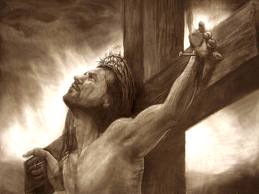
Why does sacrifice stir our hearts? Why does it affect us like nothing else? Because it is a reflection–a representation–of the greatest sacrifice, of Jesus Christ dying for his creation on a cruel cross on Calvary.


When should a sacrifice be used?


It depends on the specific case. If the story is about sacrifice–and the main character learns that he has to give himself up for others–then the climax will be a likely place for it to fit.


However, a story may not be about sacrifice, but sacrifice may still be part of it. In this case, it should be able to fit anywhere in the story–but it depends on the context.


A character could come to realize that he should be willing to sacrifice himself–not simply sacrificing others. As an example from one of my own novels, I (Robert) had a character come to a crossroads. He was a contestant in something like a bloodsport game. He was faced with a decision that had no turning back from–no second choice if he messed up. He could sacrifice himself for his friends–those he had come to know during the bloodsport–and in the process die himself. Or he could decide to let them be killed and go on himself. Out of love, he gave himself up. Both good and grief came from it, but ultimately it turned out to be the best decision for them all. If things had not turned out for good in his sacrifice, it would still have had no less meaning–life was the greatest thing he had. He had fought for it since he could walk. But then he had given up what he had coveted most for what he had found to be truly what was meaningful to him, his brethren around him.


Sacrifice doesn’t always have to result in death, although often it will. Self-sacrifice can be illustrated through characters just by patient service–being willing to die for something, or willing to live for it.


Therefore, I urge you, brothers and sisters, in view of God’s mercy, to offer your bodies as a living sacrifice, holy and pleasing to God—this is your true and proper worship.
-Romans 12:1 (NIV)


However, this doesn’t discount sacrifice to the point of death. Even to the extent of death, giving yourself up for God and devoting yourself to him is the greatest service possible.


Sacrifice is an expression of love–a great expression.


Greater love has no one than this: to lay down one’s life for one’s friends.
-John 15:13 (NIV)


So should all of your characters be regularly sacrificing themselves? It depends on the character. Some characters will have sacrificial love flowing out of them even in the smallest of manners. But some won’t.


However, having an overabundance of sacrifices can make it lose its value somewhat. Especially in a contemporary story, you probably can’t just kill too many characters off. But living sacrifices–your characters being willing to die for something, even if they don’t die–can be common. We don’t inspire others to sacrifice by writing about characters who don’t do it themselves.


In the case of a death sacrifice, if the character who had sacrificed himself comes back, there must be a good reason, else it will mean nothing. The sacrifice needs to have consequences–needs to affect something–otherwise it seems like a worthless sacrifice, just a plot element that the author needed to have happen but didn’t want to actually kill the character.


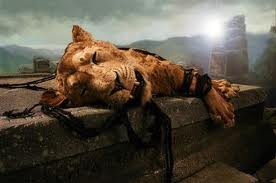
In some books–allegories especially–there will be a Christ figure. Someone who sacrifices themselves for the world. For example, Aslan from the Chronicles of Narnia is a clear Christ figure–he is the son of the Emperor-over-the-sea, and came to Narnia to sacrifice himself, so that redemption might come to those who needed it.


This is one of the highest privileges in this world–to be able to tell others of the sacrifice and resurrection of Jesus Christ. We need to make sure that we represent it clearly, so that people aren’t misled by our stories–fiction though they may be.


If you’re writing an allegory of Christ’s sacrifice and resurrection, make sure you check back to the Bible about what the core messages of Christ’s death are. It was out of love that Jesus gave himself up–not for his own sins. And he died that he might save all people.


In the case of a contemporary story, great sacrifices can still be made–even if not to death.


Then Jesus beholding him loved him, and said unto him, One thing thou lackest: go thy way, sell whatsoever thou hast, and give to the poor, and thou shalt have treasure in heaven: and come, take up the cross, and follow me.
-Mark 10:21 (KJV)


Wealth was the man’s greatest possession.  He had lived a good life, obeyed all the commandments, but could not give but one final thing–his wealth. The greatest sacrifices lie in what matters most to someone. Your characters can sacrifice without having to die–and their sacrifice doesn’t have to be any less important for it.


We hope this helps for writing sacrifices in your own stories. Obviously, we can’t cover everything in one post. If you have any questions, feel free to post them and we’ll do our best to answer.

~Jag Swiftstorm and R. A. H. Thacker

Tuesday, September 17, 2013

That Wonderful Setting...


Recently I have come aware that many writers often abuse the setting of their world for what it really could be.  A setting shouldn't just be what a character sees when he looks around, all those useless, irrelevant facts - even the interesting irrelevant facts.  But they're all useless - they add absolutely nothing to the story.


Why?


I hope you aren't wanting a short answer, because I'm just getting started.
Take, for example, this short scene.

"The City of Fardell, standing high upon a jag of rock, overlooks
the Hill of Caldune and the endless, mesmerizing forest, seemingly
only a mossy floor from a peak so high.
Darian cast his gaze elsewhere, unsettled at the sight of a heavy fog
stretching its snaking fingers across the earth.  Above him, close enough
that he felt a simple raise of a hand would touch with the aether, were gloomy,
inky clouds, billowing and rumbling as they careened across the skies.
Small dragons, spiked on wings, back, head, limbs and covered in a thick
black hide sped across the darkening sky.  Scree dragons by name, a small but
vicious and poison brood.  They flocked over the city of Fardell, screeching
a high pitched wail.
What had brought so many as of late to Fardell was beyond anyone's guess,
nevertheless, there they were, and trouble like none before was brewing.
Brewing in the depths of the earth and reaches of the aether.
And then, the city heard them.  The Aetherbrood."


What do we know about Fardell now?  We know the names of surrounding locations, a bit about a species of dragons, and then, of course, we were left at a dead drop as to what these "Aetherbrood" are.  But honestly, aside from the dragons and these strange other creatures, what does this world do to effect Darian, our main character?  It doesn't change him - nor does it even look as though he could be possibly forced to change solely because of the setting.  The key thing to this is that even if the "Aetherbrood" and these "Scree Dragons" are unique and special to Fardell, could this scene not take place in any other world, setting, or place?  Maybe a few things would need to be changed - say, in a futuristic world the dragons would be some sort of a high-tech plain or drop ship, but what does it matter?  This scene could easily, with only a few minor changes, be transported into a new - entirely different, even opposite - world.

The setting does not matter in something which could be swapped so easily.  There is an exorbitant amount of simply useless and meaningless settings.  Why?  Because they don't effect the plot, they don't enhance the character, and they don't set a definite theme and mood to the story.

Sure, from that short paragraph, you could tell that something evil was encroaching on Fardell, and even if we did care about this world, those exact same words could be transported into another world or dimension and mean the same thing - and this makes them stereotypical and dull.

The key is that in any setting, be it Si-Fi, High Fantasy, Dystopian, Steampunk, even Historical-Fiction - the key is the setting and the character have to mesh.  They have to compliment each other, and they have to click.

The setting and the character must give each other trouble.  More specifically, the setting must create problems for the character, even if your not writing a Nature-vs-Man style plot.  Some kind of conflict between character and setting, and a change in character because of the setting, must occur for the setting to be worth something.  Otherwise, I don't care if I live on Pluto 9, where the grass is orange and people walk on their heads.

For example, from one of my historical-fiction novellas, my main character, Drustan, wants one thing he could never have, and no, there is never an exception, and yes, he always pursues the dream but can just never quite get there.

And that is because of the setting.  Gaelic Ireland and Drustan mesh - even if they simultaneously clash.  Or rather, they mesh because they clash.  The setting matters to the story - it matters to Drustan.  I couldn't just move him to an entirely new world with the snap of my fingers.  Why?  Because he's engraved in the setting, just as the setting is engraved in him.

That's what we want in a setting.  We don't care if you've created two complete languages for the story, mapped out the world down to ever detail, we don't care, not if it doesn't matter to the plot and to the character, anyway.  And the setting has to change the character, form him, and force him to grow.

So many stories simply ignore the setting.  This needs to change.

~R. A. H. Thacker