This is the first part of a series titled - New Writers
Developing character is an extremely important part of writing, and creating a realistic character is the most important thing you'll want to do when first starting a story.
So how do you do it? Well, let's just clear this one thing up first. It's not easy. Never will be, never can be. And this won't make it easy, either. It's hard, really hard. You have to commit yourself to it. Then and only then will you have a realistic, developed character.
Why do you need a developed, realistic character, though? It's fairly simple. If a story has a faceless character, one who doesn't have any character development, the reader just won't care. It's as simple as that. As a write, you want the reader to cry when the hero dies, or cry in joy when he makes the right decision after a book of confliction.
You would care if your friend died, yes? You care about your friend because you know him or her. Knowing the character will make the reader feel for him or her. That's all. Knowing that the character is "real". Real in the sense that he (or she) is like humans - I'm not loony, I'm not saying your character should become human, I'm saying he or she should be like a human. Although, they're really not much difference once you get to know a character - only one is taking over your mind and the other is floating around in real life somewhere.
When you're creating a character, remember they're real - they're just not real in the sense we usually think in. They have to be real in your head.
Making them "real in your head" however, is quite difficult. First it requires a lot of time - at least a month before you have their opinions and voice - which are two complicated terms for basically what he or she would do in any random situation life will give - stuck in your head firmly. I told you this isn't going to be easy - but please, don't drop out on me yet.
And of course, you actually have to do stuff with your character during that month or 2-3 weeks it takes. You have to get into the character's head - or maybe let the character into your head. Exercising the character's opinions and voice and views and personality (like I said earlier, just how they would act in a situation of something) is a good first step making your character realistic.
If you randomly make up something totally outrageous that your character did or does (i.e. he lives in the sewers) ask yourself, why? Give your character views and opinions (they don't have to be outrageous - just anything you can think of) and ask yourself why? Have your character do something - have him or her react to something (anything!) and then ask why?
It's the Socratic Method, and it works. Ask why of every single thing your character does, and you're starting to learn who your character is.
Wait -- aren't we creating a character, not learning who he or she is? Well, like I said earlier, your characters are real, they're just in your head. You need to explore them - because they're real.
Real.
Now unleash the power of the character.
Showing posts with label Character Development. Show all posts
Showing posts with label Character Development. Show all posts
Wednesday, December 18, 2013

Thursday, November 14, 2013
Flawed
Flawed.
Think about it.
We're all flawed, which is why it just makes it all the more important. It's realistic to be flawed - because whether we want to be or not, we always will be.
Flawed characters are realistic. We're not evil - but there is two forces fighting against each other. Light and darkness. And if we don't do anything about it, the light in us will fade to darkness. It's a conflict.
And, as Mr. S (Daniel Schwabauer, creator of the One Year Adventure Novel curriculum) says, conflict is pretty much the base of any good story. Without it, there's no reason to turn the page.
A flawed character naturally has conflict - it's born within. A struggle between light and dark, day and night, yin and yang.
A flawed character can either struggle with himself internally, or he can struggle with others externally because of his flaw. Both are very common and very useful. An example of a flaw that causes internal struggle would be confusion. He's always confused, things aren't what they seem, they're twisted - at least in his eyes. Therefore, he struggles within to flesh out what is and what is not.
For an external flaw, he could be uncontrollable, leading to arguments with just about everyone around him.
Both of those I have used. In fact, I've used them in the very same character (he's very flawed, by the way, far over the ordinary).
But there's much more to flaws. Flaws, unlike many other things, come from the character, not from an external force. It's not his or her fault she has the flaw, but not resisting it is. We all pretty much have a choice of resisting evil, and so should our characters.
That puts some weight on the character, which is good. It begins to add in personal stakes.
Moving on to the subject of villains. To what extent should you flaw a villain? The exact same amount as the hero. Villains are not pure, brooding evils. Sorry, but Sauron is not a good villain. He's not relatable - at all. Villains are merely people (yes, flawed, not necessarily overly-flawed, however), who react to bad circumstances in bad ways. At least, that's the ideal villain. The only difference between a hero and a villain (a hero could, in fact, be considerably more flawed than the villain), is that the hero chooses to take a moral stance as to how he will react to misfortune, and a villain will take an immoral stance.
But back on topic.
Flaws also make a character relatable, which you probably already know.
The reason, is, obviously, because we all are flawed.
You've heard that a million times already, I know - I have too. But it doesn't just make them relatable and realistic, it too adds conflict.
Aha.
See there?
All stories are focused, based, and bred in conflict.
And another thing about flaws in villains that I hadn't realize until quite recent. In fact, right this moment.
Your villain should be flawed, yes. Your hero should be equally flawed. Every single character in your story should, in some way be flawed, because we as mortals are - it's in our blood. But a recurring theme in villains is that they go out to be emperors or killers or what not because of one single traumatic event in his or her lifetime. Now this does make sense. If his entire family was murdered in front of his eyes, that's going to hurt.
But chances are, he's not going to become a dictator. Why? Because he likely either won't have the resources, or, also very likely, he won't foster feelings of vengeance strong enough to devote his life to that.
Why not end it there with a .22 handgun?
Give him a reason for becoming what he is. Not the stereotypical reason, but something that would really lead him to do what he does. Chances are, if his village was raided, which caused his family's destruction, other children will suffer the same or similar acts - why is he so different than the rest?
But I kind of got off the topic of flaws.
~R.A.H.Thacker
Tuesday, October 29, 2013
Character Building and Character Arcs
(Fourth lesson in my writing class, going over Character Building and Character Arcs.)
Character Building is a one of the most important things in any story. A story could have an excellent plot, a stupendous theme, and a revolutionary moral, but if we don’t know why the hero is doing what he’s doing, why he is the way he is, we don’t care. Or, even worse, if we don’t give him a personality, we won’t care.
Character Building is making your character. Some writers use long lists of irrelevant questions to “interview” their characters. But Character Building is much more than knowing what color their car is, or even how old they are. Sure, they might come into the story once in a while, but likely they’ll only be mentioned.
The big part of Character Building, what you really want to focus on, is the character’s personality. The readers don’t care about what color hair the main character has, even if it’s hot pink, and that’s why you need to focus on the personality. Now say this person is sort of rebellious against her parents wishes, and she dyes her hair pink spitefully against her mother’s wishes - now that matters, because it shows part of her personality - rebelliousness.
You might already have a rough idea for a character, or maybe not. But when you’re starting out, you’ll usually want to browse over a list of traits, good and bad, and pick out a few that work well together and fit with this character you’re making. For example, don’t pick both submissive and rebellious for the same character, because they’re virtually the same. You can, however, pick shy and rebellious. Why? Because shy doesn’t necessarily contradict rebellious, it just means he or she might not be so outspoken about it.
I have a list of traits here. For starters, pick out two good traits and one bad one. It’s hard to give your hero a bad trait, but you need to realize it doesn’t make your character evil, instead it makes him or her human, realistic, and 3D. 3D as in, the character isn’t all good, their might be some dark secrets he or she is hiding, something that the character doesn’t want to reveal. In the end, you’ll probably want it to be exposed.
But that’s for later.
On that list you’ll see several disagreeable and unlikable traits that you can pick for your character. You’ll likely not be wanting to have the truly evil ones for your character. Then again, you might.
I’ll give you a few minutes to pick out three of them, two likable and one not so likable, or even evil.
So if you haven’t quite got the ones that fit, that’s alright. You can review your character this week, but now, we’ll stick with the ones you have now. You probably have some kind of a character forming in head now, so we can continue on.
I’ve pre-written a scene in which your character is faced with an important decision. Decisions, actions, and reactions are what makes a character shine through the page and become 3D to you and the reader. Your character is shaped in the decisions he makes.
Your character just discovered he has inherited one hundred million dollars from a trust fund, how does he react? Is he just satisfied? Does he hyperventilate? Maybe he is annoyed or refuses to accept if he believes money is the root of all evil. And also, aside from his physical actions, what is he thinking during this time? WHY is he excited about this? Is it because he can now move out of his old apartment, have a vacation, and still afford a lambergini? Or is it because he can now help the community by paying for a new library?
Here’s another situation.
Your character lives in a very poor district of town. He must somehow get food for the rest of himself and the rest of his family. He has two options; 1, to go out and find any sort of second or third job he can get, though its low pay still might not be enough. And 2, to go into the streets and steal bread or other food (and remember, though this might be wrong, your character would have plenty of motivation for it). Of course, if your character was lazy, he might not do anything at all. But for this exercise, pick one of the two above.
And finally for a third situation.
Your character wants a job. But at the first four interviews he’s been rejected, what does he do? Keep trying? Give up despairingly? Try a new plan? Or maybe recruit a friend for help?
The first of those three examples was how a character reacted to getting an enormous amount of money. The second was a decision, and the third was an action.
What your character wants.
What your character needs.
What your character believes (is it a lie?).
What your character thinks he needs.
If each of those questions has different answers, even if they’re just slightly varied, will make a dynamic and realistic character. Those were some good questions to build on the story goal, what the main character is going after throughout the entire story - it also builds on your character and who he or she is.
The characters, in a story, are literally the most important thing. Enjoyable characters make enjoyable stories, make your characters real.
Related Posts: Character Arcs
~R.A.H.Thacker
Character Building is a one of the most important things in any story. A story could have an excellent plot, a stupendous theme, and a revolutionary moral, but if we don’t know why the hero is doing what he’s doing, why he is the way he is, we don’t care. Or, even worse, if we don’t give him a personality, we won’t care.
Character Building is making your character. Some writers use long lists of irrelevant questions to “interview” their characters. But Character Building is much more than knowing what color their car is, or even how old they are. Sure, they might come into the story once in a while, but likely they’ll only be mentioned.
The big part of Character Building, what you really want to focus on, is the character’s personality. The readers don’t care about what color hair the main character has, even if it’s hot pink, and that’s why you need to focus on the personality. Now say this person is sort of rebellious against her parents wishes, and she dyes her hair pink spitefully against her mother’s wishes - now that matters, because it shows part of her personality - rebelliousness.
You might already have a rough idea for a character, or maybe not. But when you’re starting out, you’ll usually want to browse over a list of traits, good and bad, and pick out a few that work well together and fit with this character you’re making. For example, don’t pick both submissive and rebellious for the same character, because they’re virtually the same. You can, however, pick shy and rebellious. Why? Because shy doesn’t necessarily contradict rebellious, it just means he or she might not be so outspoken about it.
I have a list of traits here. For starters, pick out two good traits and one bad one. It’s hard to give your hero a bad trait, but you need to realize it doesn’t make your character evil, instead it makes him or her human, realistic, and 3D. 3D as in, the character isn’t all good, their might be some dark secrets he or she is hiding, something that the character doesn’t want to reveal. In the end, you’ll probably want it to be exposed.
But that’s for later.
- active
- adventurous
- affectionate
- afraid
- aggressive
- ambitious
- amiable
- angry
- animated
- annoyed
- anti-social
- anxious
- argumentative
- arrogant
- attentive
- babyish
- bored
- bossy
- brave
- brilliant
- busy
- calm
- can't keep a secret
- careful
- cautious
- charismatic
- charming
- cheerful
- childish
- clever
- clumsy
- coarse
- cold-hearted
- compassionate
- competitive
- complacent
- compulsive
- conceited
- confident
- confused
- considerate
- cooperative
- courageous
- cowardly
- crafty
- critical
- cruel
- cultured
- curious
- cynical
- dangerous
- daring
- decisive
- dependable
- dependent on others
- determined
- diligent
- discreet
- dishonest
- disloyal
- disobedient
- disparaging
- disrespectful
- dissatisfied
- doesn't learn
- domineering
- doubtful
- dutiful
- eager
- easygoing
- eloquent
- encouraging
- energetic
- enthusiastic
- fair
- faithful
- fearless
- fidgety
- fierce
- finicky
- foolish
- formal
- frank
- friendly
- frustrated
- funny
- generous
- gentle
- giddy
- giving
- glamorous
- gloomy
- grateful
- greedy
- grouchy
- gullible
- happy
- harried
- hateful
- haughty
- helpful
- honest
- hopeful
- hopeless
- hospitable
- humble
- hyper
- ignorant
- ill-bred
- imaginative
- immature
- impartial
- impatient
- impolite
- impudent
- impulsive
- inappropriate
- inconsiderate
- independent
- industrious
- innocent
- insensitive
- insolent
- intelligent
- jealous
- judgmental
- lackadaisical
- languid
- lazy
- liar
- logical
- lonely
- loving
- loyal
- lucky
- malicious
- mature
- mean
- meticulous
- mischievous
- moody
- mundane
- mysterious
- naive
- negligent
- nervous
- never satisfied
- no sense of humor
- noisy
- obedient
- obliging
- obnoxious
- observant
- obsessive
- overindulgent
- prejudice
- procrastinator
- reckless
- rude
- sarcastic
- selfish
- self-pitying
- shy
- smart
- stubborn
- superficial
- tactless
- taking self too seriously
- too trusting
- unable to commit
- uncomunicative
- unconfident
- unmannered
- untrusting
On that list you’ll see several disagreeable and unlikable traits that you can pick for your character. You’ll likely not be wanting to have the truly evil ones for your character. Then again, you might.
I’ll give you a few minutes to pick out three of them, two likable and one not so likable, or even evil.
So if you haven’t quite got the ones that fit, that’s alright. You can review your character this week, but now, we’ll stick with the ones you have now. You probably have some kind of a character forming in head now, so we can continue on.
I’ve pre-written a scene in which your character is faced with an important decision. Decisions, actions, and reactions are what makes a character shine through the page and become 3D to you and the reader. Your character is shaped in the decisions he makes.
Your character just discovered he has inherited one hundred million dollars from a trust fund, how does he react? Is he just satisfied? Does he hyperventilate? Maybe he is annoyed or refuses to accept if he believes money is the root of all evil. And also, aside from his physical actions, what is he thinking during this time? WHY is he excited about this? Is it because he can now move out of his old apartment, have a vacation, and still afford a lambergini? Or is it because he can now help the community by paying for a new library?
Here’s another situation.
Your character lives in a very poor district of town. He must somehow get food for the rest of himself and the rest of his family. He has two options; 1, to go out and find any sort of second or third job he can get, though its low pay still might not be enough. And 2, to go into the streets and steal bread or other food (and remember, though this might be wrong, your character would have plenty of motivation for it). Of course, if your character was lazy, he might not do anything at all. But for this exercise, pick one of the two above.
And finally for a third situation.
Your character wants a job. But at the first four interviews he’s been rejected, what does he do? Keep trying? Give up despairingly? Try a new plan? Or maybe recruit a friend for help?
The first of those three examples was how a character reacted to getting an enormous amount of money. The second was a decision, and the third was an action.
What your character wants.
What your character needs.
What your character believes (is it a lie?).
What your character thinks he needs.
If each of those questions has different answers, even if they’re just slightly varied, will make a dynamic and realistic character. Those were some good questions to build on the story goal, what the main character is going after throughout the entire story - it also builds on your character and who he or she is.
The characters, in a story, are literally the most important thing. Enjoyable characters make enjoyable stories, make your characters real.
Related Posts: Character Arcs
~R.A.H.Thacker
Monday, September 23, 2013
Point of View Shifts
Nearly my entire life I have never been able to grasp what exactly POV (Point of View) shifts were. I had heard the term dozens of times. I had even heard explanations as to what it was.
But it didn't click.
For some reason, I just didn't understand.
What did they mean? Never to change POV's? Many published authors have done that - but I supposed it could be because, as the saying goes, you must know the rules before you can break them.
So for a while I was contented, at least to some extent, to leave it there. But it still didn't really fit.
And then I realized, after such a long time, what they actually were.
Young writers - in fact, even matured writers - should not take on too many points of view. Not only can you lose the readers, you will lose the character's voice, which is one of the absolute worst things that can happen to your story. Wayne Thomas Batson's newest novel, a John Spector novel called Ghost, is an example in which I personally was lost.
I was reading it lightly, as entertainment (as much as Ghost should be, at least) - not analyzing its literary worth. But it lost me. Especially when I was shipped from first to third person. Now I had no idea who either character was, and I was point of view hopping all over the place.
I wasn't going to stick around for a book that had questionable themes, and that didn't even hold my interest. Now I'm not trying to give Ghost a bad wrap, but I have to be honest as a reader - I couldn't finish the book.
This was predominately because I was never thrust into Spector's head. I didn't have the slightest clue of who he really was. I was given some of the externals about him (and I'm not talking about the physical externals), but not much else.
Point of View shifts was not what killed the manuscript, however. This is merely to bring around my point - you cannot lose the character's voice. If you do, you will undoubtedly lose the reader as well.
For now, I'm going to talk about just one small part of this - the aspect of POV shifts. There are a hundred million ways you can make this error, but a common one comes from what the main character cannot possibly know. He hasn't experienced, seen, or been told it - he shouldn't know it. And therefore, the reader shouldn't be told it blantantly either.
"Gabriel raced to the window, hoping to catch a sight of the fleeting bird. Something about it sparked an idea of suspicion - or maybe it was hope. What was it? The bird was clearly a creature of prey, with a wide wingspan, but a sleek and arrow-dynamic body. Dark purple, red, or even black painted the bird, all dark except for a golden flare on the crown of its head running down to the back of the neck. No bird of its likeness had ever before been seen within or around the borders of Fardell. It must have been yet another terror Lord Drakk had sent out to haunt the city.
"What was that beast?!" Shadler asked, clearly not even wanting an answer. Anger raged inside him, he felt the need to charge out into the open wild, bow in hand, and battle the murderous creature. At that moment, he swore in his heart to kill the beast."
In the first paragraph, Gabriel races to the window and begins to think. It's clearly all going on inside his head - it does, after all, feel like he is the main character.
But in the second paragraph, we're suddenly brought out of that feeling. It's now in Shadler's head - and even though he's not thinking as Gabriel had been, how could Gabriel possibly know that Shadler had vowed to kill the beast - let alone even know that he's angry. We do not even see him showing anger physically, which should be the only way Gabriel knows unless Shadler explicitly tells him that he's angry.
But he doesn't.
And that right there is a perfect example of Point of View shifting. We're stuffed into one character's head, and then wrenched out a moment later. Likely, you won't even notice it if you're reading the book for enjoyment - but you're not going to feel either of them if it continues.
Shifts are when the focus point goes from the center character to another character mid-scene. It's alright to do it once in a while between chapters or scenes - not alright any other time.
So let's see if we can fix this scene up a little.
"Gabriel raced to the window, hoping to catch a sight of the fleeting bird. Something about it sparked an idea of suspicion - or maybe it was hope. But what was it? The bird was clearly a creature of prey, with a wide wingspan, but a sleek and arrow-dynamic body. Dark purple, red, or even black painted the bird, all dark except for a golden flare on the crown of its head running down to the back of the neck. No bird of its likeness had ever before been seen within or around the borders of Fardell. It must have been yet another terror Lord Drakk had sent out to haunt the city.
He turned to face the thundering boots echoing down the hallway. It was Shadler again, a snarl on his lip and sweat glinting across his face. He quickly marched up to Gabriel who towered over him nearly a head higher. Shadler shook heavily with each raspy breath.
"What was that beast?!" Shadler slammed a fist into his palm, his eyes were rife with wildness and darted from place to place, demanding an immediate answer."
In this scene, things are almost all fixed. The very last sentence in the final paragraph is still a minor POV shift. Pick it out and fix it for yourself, post the answer in the comments below.
A POV shift can even be as simple as one or two words - anything that the central character cannot know. It is also when the 'camera', or point of view, peaks into another character's head. DON'T DO IT. Point of View shifts are sly and sneaky, but they are the downfall of countless stories.
So get out there are tackle some shifts!
R. A. H. Thacker
Saturday, September 21, 2013
Sacrifice
This is the first in a series of posts co-written by me and fellow teenage author, Jag Swiftstorm, who can be found at From A Jagged Inkwell. This post can also be found at his blog.
And no, we’re not talking about human sacrifice. Or maybe we are. But we’re actually talking about self-sacrifice–and not some suicidal tribal custom, either. More specifically, how to use it in fiction.
And no, we’re not talking about human sacrifice. Or maybe we are. But we’re actually talking about self-sacrifice–and not some suicidal tribal custom, either. More specifically, how to use it in fiction.
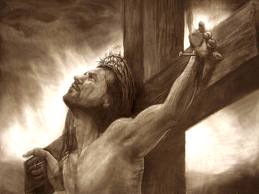
Why does sacrifice stir our hearts? Why does it affect us like nothing else? Because it is a reflection–a representation–of the greatest sacrifice, of Jesus Christ dying for his creation on a cruel cross on Calvary.
When should a sacrifice be used?
It depends on the specific case. If the story is about sacrifice–and the main character learns that he has to give himself up for others–then the climax will be a likely place for it to fit.
However, a story may not be about sacrifice, but sacrifice may still be part of it. In this case, it should be able to fit anywhere in the story–but it depends on the context.
A character could come to realize that he should be willing to sacrifice himself–not simply sacrificing others. As an example from one of my own novels, I (Robert) had a character come to a crossroads. He was a contestant in something like a bloodsport game. He was faced with a decision that had no turning back from–no second choice if he messed up. He could sacrifice himself for his friends–those he had come to know during the bloodsport–and in the process die himself. Or he could decide to let them be killed and go on himself. Out of love, he gave himself up. Both good and grief came from it, but ultimately it turned out to be the best decision for them all. If things had not turned out for good in his sacrifice, it would still have had no less meaning–life was the greatest thing he had. He had fought for it since he could walk. But then he had given up what he had coveted most for what he had found to be truly what was meaningful to him, his brethren around him.
Sacrifice doesn’t always have to result in death, although often it will. Self-sacrifice can be illustrated through characters just by patient service–being willing to die for something, or willing to live for it.
Therefore, I urge you, brothers and sisters, in view of God’s mercy, to offer your bodies as a living sacrifice, holy and pleasing to God—this is your true and proper worship.
-Romans 12:1 (NIV)
However, this doesn’t discount sacrifice to the point of death. Even to the extent of death, giving yourself up for God and devoting yourself to him is the greatest service possible.
Sacrifice is an expression of love–a great expression.
Greater love has no one than this: to lay down one’s life for one’s friends.
-John 15:13 (NIV)
So should all of your characters be regularly sacrificing themselves? It depends on the character. Some characters will have sacrificial love flowing out of them even in the smallest of manners. But some won’t.
However, having an overabundance of sacrifices can make it lose its value somewhat. Especially in a contemporary story, you probably can’t just kill too many characters off. But living sacrifices–your characters being willing to die for something, even if they don’t die–can be common. We don’t inspire others to sacrifice by writing about characters who don’t do it themselves.
In the case of a death sacrifice, if the character who had sacrificed himself comes back, there must be a good reason, else it will mean nothing. The sacrifice needs to have consequences–needs to affect something–otherwise it seems like a worthless sacrifice, just a plot element that the author needed to have happen but didn’t want to actually kill the character.
In some books–allegories especially–there will be a Christ figure. Someone who sacrifices themselves for the world. For example, Aslan from the Chronicles of Narnia is a clear Christ figure–he is the son of the Emperor-over-the-sea, and came to Narnia to sacrifice himself, so that redemption might come to those who needed it.
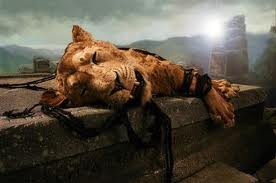
This is one of the highest privileges in this world–to be able to tell others of the sacrifice and resurrection of Jesus Christ. We need to make sure that we represent it clearly, so that people aren’t misled by our stories–fiction though they may be.
If you’re writing an allegory of Christ’s sacrifice and resurrection, make sure you check back to the Bible about what the core messages of Christ’s death are. It was out of love that Jesus gave himself up–not for his own sins. And he died that he might save all people.
In the case of a contemporary story, great sacrifices can still be made–even if not to death.
Then Jesus beholding him loved him, and said unto him, One thing thou lackest: go thy way, sell whatsoever thou hast, and give to the poor, and thou shalt have treasure in heaven: and come, take up the cross, and follow me.
-Mark 10:21 (KJV)
Wealth was the man’s greatest possession. He had lived a good life, obeyed all the commandments, but could not give but one final thing–his wealth. The greatest sacrifices lie in what matters most to someone. Your characters can sacrifice without having to die–and their sacrifice doesn’t have to be any less important for it.
We hope this helps for writing sacrifices in your own stories. Obviously, we can’t cover everything in one post. If you have any questions, feel free to post them and we’ll do our best to answer.
~Jag Swiftstorm and R. A. H. Thacker
Thursday, September 12, 2013
That Sweet, Bitter, Sad, Crying Moment...
When everything is ruined, when emotional strain peaked, your character does the unthinkable...
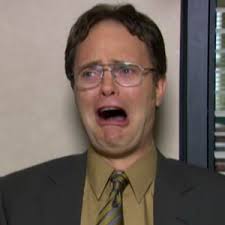
Most of all, we usually don't want our characters ending up like that man in the picture above, do we?
So display that moment of intense distress - but make it original, and think before letting a character shed tears.
~R. A. H. Thacker
He cries.
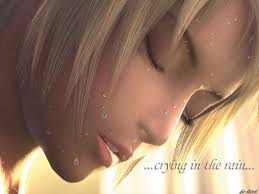
Call me weird, but I don't like cry scenes. And I know for a fact you'd be calling a lot of other people weird too if you called that weird.
Have you ever noticed how ineffective a crying moment can be? I know, all of us authors might be crying with the character. And sometimes, it's okay to have a character cry.
But crying... crying is about the worst physical way you can show your character is going through an emotional phase. Everyone cries. Just rarely enough to make it seem like some great thing to us authors, but it's very inexpressive - or, at least, much less than you could have it be. Live up to the scene's emotional intensity, reveal a habit in the character - make this his scene, not a weeping one.
That said, a moment or two is acceptable. But especially in a book, most of the time you're going to want to keep it to the absolute minimum.
While movies can get away with a crying scene a bit easier, we writers, we can't do that so well.
Most of all, we usually don't want our characters ending up like that man in the picture above, do we?
So display that moment of intense distress - but make it original, and think before letting a character shed tears.
~R. A. H. Thacker
Tuesday, September 10, 2013
Antagonists - Part IV
Welcome to the fourth and final post on, yes, antagonists. This time, however, it's not going to be me giving you advice, rather, this post is more of a resource dump. For antagonistic motives. I know I went over a few in Part 2, but there are literally hundreds more.
6. Fanatical Reformer
8. Survival
9. Wrongfully Accused
11. Brainwashed
12. Ignorant Obedience
13. Action Junkie
14. Family Traditions
1. To Distinguish Oneself
2. Greed
4. Power Trip
5. Sheer Insanity
6. Fanatical Reformer
7. Patriotism
8. Survival
9. Wrongfully Accused
10. Undercover Good Guy
11. Brainwashed
12. Ignorant Obedience
13. Action Junkie
14. Family Traditions
15. Romance
16. Envy
17. To Fit In/Gain Acceptance
18. Justice
19. Fear
20. Desperation
21. Social Cohesion
22. A Desire To Better Humanity/Society
23. To Escape One's Destiny
24. To Achieve One's Destiny/Fulfill A Prophecy
25. Drama/Trama
26. Pride
27. Loneliness
28. Oppression
29. The Want To Make Others Know How Painful His Life Has Been
30. Paranoia
And you know one of the greatest things also about motives is that there is an endless supply of them. If none of the above "click" with you villain, the best motive could also be the same as your hero's. Like I've said before, it's how the villain tries to achieve his goal that makes hero and villain so different.
Question or comment? Want to know what a specific motive means? Post below, I will reply.
~R. A. H. Thacker
Monday, September 9, 2013
Antagonists - Part III
Welcome to the third and not-quite-the-last post of my series on antagonists. As I said yesterday, we're going to be going into the evil acts your villain commits. (Just as a note, this is going to be child friendly post - as all the others are as well, just to clear up any possible misconceptions.)
Now that you have a villain with a definite category, we get to the major brainstorming stage. You likely have a fairly clear idea as to why he is motivated to make your hero's life miserable, this post is all about enhancing it.
As any tactician of war would know, you must know who your enemy is if you are to win. That was allegedly part of what brought Napoleon Bonaparte down - the Duke of Wellington had fought him too much and learned who he was and what he did on the battlefield.
Such is the same with our antagonist. But we also need to know the hero. Assuming you have a clear and well developed idea of who your hero is, this shouldn't be a problem.
Why? Because somewhere along the lines of building the protagonist of your story you had to hit a sensitive subject - at least for the hero. Somewhere along the line, you had to hit that spot where it hurt. The hero's fears. Dreads. Terrors. What he hated, what he feared - all that good stuff.
Those are the things that your villain must exploit. Your villain has to be clever. A mastermind - brilliant beyond the normal man. And he has to exploit that and ruin the hero's dreams. No, this isn't just another obstacle for the hero to overcome - this, this, is the point it all hangs on. And this is when the journey looks like it was a total waste of time - and their lives were put to waste.
And remember that sometimes evil does win. And it triumphs over good, and crushes it under the black hoof. And all hope is gone, and evil is reigning.
At least for now.
~R. A. H. Thacker
Sunday, September 8, 2013
Antagonists - Part II
Welcome back! This second part of antagonists will be devoted solely to finding the right motive for your antagonist.
5. Sheer Insanity - Likely the most well known example is the Joker from The Dark Knight. He is a superb example of sheer insanity.
6. Fanatical Reformer - Does he want a world Hitler-esque? Maybe he actually wants to help the poor in an oppressive nation, but he uses evil methods to do so.
7. Patriotism - So fifty years into the future a President is assassinated. The Vice President comes in as President and vows to hunt the assassins down to the end of the Earth. (Yes, even villains can fit into that situation that would seem like a good choice.) Of course, you can put any spin you want on that. Patriotism is an interesting concept for sure. Patriotism could also go for loyalty. May hap your villain is so loyal to his family he tries to kill the hero for somehow effecting them.
8. Survival - Ever think that the villain might just be wanting to survive? That's it, no power trips?
9. Wrongfully Accused - A hero labeled to be an evil power? An innocent decoy from the real problem?
10. Undercover Good Guy - Unless he didn't actually harm anyone during his regime, this would be hard to explain if he killed any innocents. But neither this nor wrongfully accused would work for the evil boss of them all.
11. Brainwashed - Only for enemy sidekicks. It can also explain number 12 well, though.
12. Ignorant Obedience - Best for a villain subordinate, this can lead to an interesting twist if the character realized he's just mindlessly obeying his leader and doing wrong things just because of his ignorance.
13. Action Junkie - This goes with the Joker-esque pretty well, but could be separate of plain insanity and a power trip.
14. Family Traditions - A headhunting tradition every Halloween? (No, really, a headhunting, where they hunt for heads as trophies.) Bounty hunting operations? There's a vault stock full of golden promise in this motive.
Let me talk briefly about motives in general before we analyze individually.
As I said in the last post, antagonists are not evil people, they are people doing evil things and being corrupted by evil. If they're really and truly evil people, they'll likely be pretty bland. Blech. We don't want that for our villains, now do we? No, because then we'll end up with a diluted Sauron, and honestly, what was it that made Sauron such a great villain? Was he really even a great villain at all? I'm inclined to say no. We know little about the great Eye, want he wants (aside from world domination - but wait, what does he want from world domination?), or why he wants it.
In general 'purely evil' antagonists are major spills. Galbatorix, from The Inheritance Cycle, was an undeveloped villain with a common motive and a common goal. He wasn't interesting - all we see him doing is ordering around a bunch of Urgals and torturing people. So I'm going to put Ol' Galby in the fail section as well - not to say he didn't serve Paolini's position, he did that well, but when an antagonist fits perfectly into a pre-designed plot, that pretty much means he laid down plans so he himself could get caught in the end.
Right, so now we can get a bit closer in on one of the areas that makes a great villain. I'll start off with a list of motives and look at them analytically.
But first, I'm going to leave out the topic of Revenge out. Why? Not because it's a 'bad' motive that you shouldn't use (whatever works best for you is what you should do, this is all just advice), no, it's because Revenge has more than a dozen sub categories of it's own, many of which are listed below.
1. To Distinguish Oneself - The beat up little kid from middle school now turned into a supervillain? Not realistic enough? Maybe this motive thrown into the gears could give it a bit more of a flare.
2. Greed - As one great writer said, although this is a realistic motive, it's far too one dimensional and overused. Greed is often used for anti-heroes. But not truly greedy, just kinda greedy. This is because they don't want their anti-heroes to be evil. Well, like I said, antagonists are people who are doing evil things - this goes also for anti-heroes. Or maybe you don't want to go all the way to evil things, but you need to. No one can be 'lukewarm' when thrust into bad situations. It's hot or cold, and you have to go all the way for your characters, at least for now.
4. Power Trip (including Megalomania) - You can pretty much tell where this one is going. It's the same basic idea of sheer insanity though.
5. Sheer Insanity - Likely the most well known example is the Joker from The Dark Knight. He is a superb example of sheer insanity.
6. Fanatical Reformer - Does he want a world Hitler-esque? Maybe he actually wants to help the poor in an oppressive nation, but he uses evil methods to do so.
7. Patriotism - So fifty years into the future a President is assassinated. The Vice President comes in as President and vows to hunt the assassins down to the end of the Earth. (Yes, even villains can fit into that situation that would seem like a good choice.) Of course, you can put any spin you want on that. Patriotism is an interesting concept for sure. Patriotism could also go for loyalty. May hap your villain is so loyal to his family he tries to kill the hero for somehow effecting them.
8. Survival - Ever think that the villain might just be wanting to survive? That's it, no power trips?
9. Wrongfully Accused - A hero labeled to be an evil power? An innocent decoy from the real problem?
10. Undercover Good Guy - Unless he didn't actually harm anyone during his regime, this would be hard to explain if he killed any innocents. But neither this nor wrongfully accused would work for the evil boss of them all.
11. Brainwashed - Only for enemy sidekicks. It can also explain number 12 well, though.
12. Ignorant Obedience - Best for a villain subordinate, this can lead to an interesting twist if the character realized he's just mindlessly obeying his leader and doing wrong things just because of his ignorance.
13. Action Junkie - This goes with the Joker-esque pretty well, but could be separate of plain insanity and a power trip.
14. Family Traditions - A headhunting tradition every Halloween? (No, really, a headhunting, where they hunt for heads as trophies.) Bounty hunting operations? There's a vault stock full of golden promise in this motive.
15. Romance - Yes, the antagonist could 'fall in love' with someone the hero knows or cares about. This is a great ploy if his objective is to lure our hero into his base after whom the villain 'fell in love' with. Or possibly to inherit a great amount of wealth or some other important asset. But, if the antagonist truly 'falls in love' with someone who he had originally intended to use as a pawn on a greater board, it can stick him in a very awkward position. That also delves deeper into the character, which is always for the best.
And the list goes on. But really, I can't brief even half of the possible options in a series of twenty posts. Whatever motive you choose, make sure it fits the villain. For example, if your antagonist were a geeky nerd with insane and lethal science experiment products, he likely wouldn't be much of an action junkie, unless it's a secret he's held in his heart for all his life.
Pick one of the motives and assign him to your character. Perhaps he's sounding a little more nefarious now, but if not, there's still more to come.
Tomorrow we'll be exploring the evil acts of an up and running villain. In the mean time, work on your antagonist's past. Bullied at school? That's kiddie, cliche stuff. Your villain needs more, more. Put him through terrors worse than anything you created before. Why? Because not every kid who's bullied at school tries to take over the world - and nearly succeeds.
~R. A. H. Thacker
(Yes, I just gave you homework in that last paragraph.)
Saturday, September 7, 2013
Antagonists - Part I
A series on the subject of antagonists, villains, ruffians, and sheer evilness begins here, at the beginning, where it should start. Part I.
Now antagonists and plots are about my two favorite things in any story. I find that antagonists often end up as my favorite characters.
It isn't because I'm some bloodthirsty maniac. It isn't because I enjoy being evil. It isn't because I want to grow up to be some villain myself.
No, I'm interested in villains largely for one reason. Their motive (that and a good villain is really enjoyable to read...). And how they play out their actions to complete their goals. Brian Jacques's villains are superb, no one could say Cluny the Scourge is boring. No one could say Badrang of Marshank is bland. The Joker, from The Dark Knight, he too ranks up in some of my favorite villains. Why is this? Because he's brilliant. They're all brilliant. Insane, yes, but brilliant. And a villain who just lays elaborate plans so he himself can end up losing is just ridiculous - but that's what the villains are. Ridiculous. A few villains are really and truly smart. The rest? They don't give any meaning to the story. They should be scrapped.
So, let's create a villain. Right here, right now.
First, we need, just like every other character, two attributes (or good traits) and one flaw. We'll build on this later, but first you need to remember a villain is not an evil person, but a person who is doing evil things and being corrupted by evil. (Unless you're going with a Sauron style villain, which at them moment I advise you not to do. More on this later.)
Second, we need a dastardly evil thing he does. You already have something good if you used my character plot form a post back. But if you're completely out of ideas, start from the beginning. What's something really evil someone could do to hurt your main character? Think about it.
Now what can he do to hurt the world?
And finally (most importantly), what's his motive? Revenge is the most common. Try something new, but don't go for the old cliche 'just pure evil', unless you can pull that off really well and you know it. The Joker was a perfect example of insanity and pure evil. But I advise you to come up with something else. You could try the villain who honestly thinks he's helping the world (though I advise you to be wary of this one as well, more about this in the next part), or maybe he feels guilty (there are quite a few promising ideas for this one), or maybe it's in an effort to redeem himself, or save his oppressed people (using evil methods, granted). There are endless reasons.
But whatever the reason, make sure the motive is something realistic. Give your hero and your villain the same motive for a toss up. The key thing is to show how the antagonist reacts to things differently - in a twisted, evil way. For good reason - maybe his parents were massacred by the ruling government - but what he does must be evil.
So what do we have? An evil act, two traits and one flaw, and a motive. Excellent start. In the next post we will be going much more in depth with the antagonist motives, and briefly also touch on his past.
~R. A. H. Thacker
Thursday, September 5, 2013
Character Small Talk
"Hey Bob."
But that's beside the point. Small talk has to have a destination - even if it's really little small talk. Does it really matter to the plot? To the character arc? To the theme?
"Hey Jo."
"How are you Bob?"
"I'm great."
"That's good."
"How are you, Jo?"
"Oh I'm pretty good."
"That's great, Jo."
"So what have you been up to, Bob?"
"Oh, not much. This and that. The dog's got fleas."
"That stinks."
"Yeah."
"So what've you been doing Jo?"
"My back hurts from mowing the lawn."
"Oh. That stinks almost as much as my dog's fleas."
"Uh-huh. I feel like I've got a hernia."
Aside from the incredibly ridiculous writing there, what did we learn from it? It's boring. And not like the kind of boring six year old's will start getting fidgety at - the kind where it'll make an elderly, wheelchair bound man start jumping off the walls screaming.
But not all small talk has to be boring. It shouldn't be boring - nothing in your novel should be boring, and if it is, you definitely need to revise that area. No matter what, make it at least slightly more interesting.
But that's beside the point. Small talk has to have a destination - even if it's really little small talk. Does it really matter to the plot? To the character arc? To the theme?
Each of those could be reflected in a small talk sequence, or all of them, but the importance of a small talk happenstance is not to be action oriented, nor is it to be a major revealing in a character's personality - that's what we call Big Talk.
No, small talk is meant to make a character real. Everyone talks about trivial things in their life. Maybe your character is radically obsessed with Pokemon, or is a dare devil extremist, but if these things aren't important to the story, character arc, or theme, they still have a purpose left for them to take up.
Possibly the greatest example of this I have read was in the Bellmaker (I highly recommend it, one of Jacques best even though its underrated), one of Brian Jacques's classic stories of Redwall. Several of the characters had been caged inside of the evil villain's castle, and now sat gloomily about in the castle dungeon. They began to talk - talk about trivial things. About their home, a reminiscing of sorts. It was almost sad, nostalgic, and bittersweet. It was simple small talk, going over their favorite foods and customs, and yet I felt so connected to them because I knew them, I knew who they were. They were real.
Possibly the greatest example of this I have read was in the Bellmaker (I highly recommend it, one of Jacques best even though its underrated), one of Brian Jacques's classic stories of Redwall. Several of the characters had been caged inside of the evil villain's castle, and now sat gloomily about in the castle dungeon. They began to talk - talk about trivial things. About their home, a reminiscing of sorts. It was almost sad, nostalgic, and bittersweet. It was simple small talk, going over their favorite foods and customs, and yet I felt so connected to them because I knew them, I knew who they were. They were real.
A reader will relate to someone who talks about what they like and don't like, even if they hate Pokemon, or are seriously creeped by dare devils - they'll still know the character, and the readers are going to grow to like, or at least respect, them even subtly over these small talk times.
A thing that can be often overlooked in creating a character is his hobbies. Give him a half dozen hobbies.
Now give him three more. No, really. A reader will come to love a character - just simple words on a piece of paper (sometimes even digital), through knowing him. A reader needs to know your character. Major decisions? Tense situations? They're all good, but they're the big things in life. Do we reveal part of ourselves to our best friends every week so our 'story' can go on? No. But we talk to them. Just simple, small talk. And we learn about each other, and we grow as friends.
Now give him three more. No, really. A reader will come to love a character - just simple words on a piece of paper (sometimes even digital), through knowing him. A reader needs to know your character. Major decisions? Tense situations? They're all good, but they're the big things in life. Do we reveal part of ourselves to our best friends every week so our 'story' can go on? No. But we talk to them. Just simple, small talk. And we learn about each other, and we grow as friends.
Sometimes, small is best.
~R. A. H. Thacker
Wednesday, September 4, 2013
Outlining: It's Easy
I know a lot of you out there don't outline your stories. And through that maybe you've come to great success.
Maybe you haven't, like me.
It all, of course, depends on your style. There's nothing wrong with "pantsing" a novel. There's nothing wrong with plotting. It's all about tastes and styles. I, personally, have attuned my taste buds to outlining, so let me give you a few tips on it.
First off, if you're outlining a novel do not - I repeat do not outline every single event, especially if this is a new idea. I ruined one whole promising trilogy over outlining too much and stifling creativity. That's not to say, however, all outlining ruins creativity. My outline was so in depth, it was more of a short story than an outline, with lots of events, and a poor amount of description.
Don't write it down - sketch it down. Draw a simple box - don't ink it all in. When you're writing, that's when you fill it all in.
Now I'm sure there are some who might benefit from doing extremely long and detailed outlines, that's why it is critical for us all to test each method out, but from my own experience, you're likely going to ruin your plot (unless you're a control freak - then you'd benefit from this method...). Most importantly though, you need to find your style and what works best for you.
So here's my sage advice on outlining a novel. Yes, even pantsers would benefit from an outline, even if it's just a paragraph, because I think we all agree (unless you're really far out) it's best to think before you speak. Even more so with writing. It gives you a vague route to trace along, while you can still let your mind run like mad in the plains of creativity - even jump down a rabbit trail for a while.
A Form for Pantsers:
How did past events tie in, and lead up to, the Inciting Incident, the first major thing that happens? (This is the backstory. Give it a quick sentence like this: Daniel Formouth entered a writing contest and waits expectantly for the announcement of winners to come in his mail. Or, he might not even expect to win the contest and had forgotten about it, creating a more intriguing inciting incident, such as when he learns he's the first place winner and is quickly becoming a buzz over the internet.)
What is the Inciting Incident? (This is the first major event that spurs on the plot. Give it, too, a brief sentence such as: Daniel has become a writing star now that he has won the national contest, and the country is abuzz with his incredible talent.)
What Emotional and Physical tension, along with other events, goes on during the Rising Action, or the period before the Climax? (Here you can put in a bit more detail, but if you don't like outlining that much, a simple paragraph is perfect.)
What happens during the Climax? (Don't go overboard, a sentence or two is great.)
What happens during the Falling Action? (Tie this up in a few sentences.)
And Finally, what pulls everything together in the end? (Keep this just at a few sentences as well.)
Aha, see what I did there? Your plot is now outlined, you have plenty of space for creativity and random inspirations, and it wasn't hard, nor did it take any great length of time. I use this method to sketch out a very wide, shaky circle, which can then be inked in with a bit more detail before the writing process actually begins.
Now, this is very plot oriented. There isn't much character development outlining in there. So why not outline the character arcs?
What was your character like in the past? (This is the backstory. One of the essential things in creating a character - remember what he is, and what he becomes. We'll get into more detail later.)
How did the Inciting Incident change him, and why did the Inciting Incident move him to do something? (A death is a very common (though cliche) and realistic example, while things such as a simple move to another house (even the non-haunted ones...) can provide enough tension and motivaton. Daniel Formouth slowly became more snooty as he grew ever more popular. In that short sentence we explain how the Inciting Incident changed him. Now in a second sentence we see what the Inciting Incident moved him to do. He began to push away his friends from the past, disassociating and ignoring them more and more with each passing day.)
What Emotional tension and stressful decisions must he go through during the Rising Action, and how does that change the character? (This is definitely an important part, as this is the setting up to what makes the climax really nerve-wracking or heartbreaking - this is where you develop a bound between reader and character.)
What personal decisions and changes happen in your character during the climax? (This is the climax of your novel - the emotional side of things. Be wild, be creative. What must he do to come out on top as the lone survivor of a gruesome human bloodsport? Must he break a relationship? Kill an innocent man? Or maybe he realizes that he doesn't have to come out at the top - maybe for once it's okay to let go and sacrifice himself for others or for a greater cause. It's all up to you. But be wild - be insane. Torture your character at this point - drag him through the toughest times of his life - don't go easy on him just because you think you've got enough for him to struggle through. Press him, press him harder - press him to the brink of death... or beyond.)
What decisions does your character need to take now that the climactic fight is over during the latter periods of the falling action? (Yes, more decisions. Decisions are a pivotal point in exploiting how your character has changed. Here we're beginning to tie things up, but as the slow character arc is progressing, this is where you'll find the last stretch of the arc coming into place, just before meeting up with the final point. In the aspect he's been changing in, it's become ever more clearer he's changed.)
During the Resolution, the ending period, what major things does your character realize has changed inside of him? (Is he bold and courageous now? Is he kind and caring? While the first sentence might sell the book, this is what sells the series - and possibly your reputation. This is what makes people spread the word voluntarily to their friends - but most of all, this is the satisfying ending. Make it take whatever course you like, but remember, unless it's a series (and sometimes even then), we all want a satisfying ending, else we'll feel cheated.)
So? What are you waiting for? Go get out there and write! You now know most of the basic information about your plot, and your character arc is well fleshed out for a fledgling, yet ever growing story. And it is your story. The story we all want to here you put to words.
A short list of things you may also want to fill out.
What are your character's quirks?
What are your character's major flaws?
What are your character's positive traits?
Does your character feel ashamed of any of his quirks or flaws?
Or for an interesting twist, does he feel ashamed about his traits?
What things has your character done that he is ashamed of?
What are the lies he believes?
What is his main driving goal?
Is that goal just slightly off touch with his allies and/or leaders?
What kind of a person would this character most likely open up to if he usually hides his emotions from others?
The final one can be very useful if you're trying to reveal his character, because no matter who the person is, there is always someone out there that they will find more comfortable talking about themselves and their feelings with.
Now obviously, there is an endless amount of other helpful tips out there. I cannot give you all the advice I have in one post, but all of the things above are essential to every story, but be persistent and you won't fall astray. What are your thoughts on outlining, character arcs, and the like?
~R. A. H. Thacker
Subscribe to:
Posts (Atom)