Thursday, September 12, 2013

That Sweet, Bitter, Sad, Crying Moment...

When everything is ruined, when emotional strain peaked, your character does the unthinkable...

He cries.

Call me weird, but I don't like cry scenes.  And I know for a fact you'd be calling a lot of other people weird too if you called that weird.

Have you ever noticed how ineffective a crying moment can be?  I know, all of us authors might be crying with the character.  And sometimes, it's okay to have a character cry.

But crying... crying is about the worst physical way you can show your character is going through an emotional phase.  Everyone cries.  Just rarely enough to make it seem like some great thing to us authors, but it's very inexpressive - or, at least, much less than you could have it be.  Live up to the scene's emotional intensity, reveal a habit in the character - make this his scene, not a weeping one.

That said, a moment or two is acceptable.  But especially in a book, most of the time you're going to want to keep it to the absolute minimum.

While movies can get away with a crying scene a bit easier, we writers, we can't do that so well.


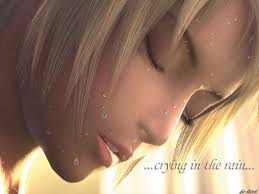
Most of all, we usually don't want our characters ending up like that man in the picture above, do we?

So display that moment of intense distress - but make it original, and think before letting a character shed tears.

~R.  A. H. Thacker

Tuesday, September 10, 2013

Antagonists - Part IV

Welcome to the fourth and final post on, yes, antagonists.  This time, however, it's not going to be me giving you advice, rather, this post is more of a resource dump.  For antagonistic motives.  I know I went over a few in Part 2, but there are literally hundreds more.

1.  To Distinguish Oneself

2.  Greed

4.  Power Trip

5.  Sheer Insanity

6.  Fanatical Reformer

7.  Patriotism 

8.  Survival

9.  Wrongfully Accused

10.  Undercover Good Guy

11.  Brainwashed

12.  Ignorant Obedience

13.  Action Junkie

14.  Family Traditions

15.  Romance

16.  Envy

17.  To Fit In/Gain Acceptance

18.  Justice

19.  Fear

20.  Desperation

21.  Social Cohesion

22.  A Desire To Better Humanity/Society

23.  To Escape One's Destiny

24.  To Achieve One's Destiny/Fulfill A Prophecy

25.  Drama/Trama

26.  Pride

27.  Loneliness

28.  Oppression

29.  The Want To Make Others Know How Painful His Life Has Been

30.  Paranoia

And you know one of the greatest things also about motives is that there is an endless supply of them.  If none of the above "click" with you villain, the best motive could also be the same as your hero's.  Like I've said before, it's how the villain tries to achieve his goal that makes hero and villain so different.

Question or comment?  Want to know what a specific motive means?  Post below, I will reply.

~R. A. H. Thacker

Monday, September 9, 2013

Antagonists - Part III

Welcome to the third and not-quite-the-last post of my series on antagonists.  As I said yesterday, we're going to be going into the evil acts your villain commits.  (Just as a note, this is going to be child friendly post - as all the others are as well, just to clear up any possible misconceptions.)

Now that you have a villain with a definite category, we get to the major brainstorming stage.  You likely have a fairly clear idea as to why he is motivated to make your hero's life miserable, this post is all about enhancing it.

As any tactician of war would know, you must know who your enemy is if you are to win.  That was allegedly part of what brought Napoleon Bonaparte down - the Duke of Wellington had fought him too much and learned who he was and what he did on the battlefield.

Such is the same with our antagonist.  But we also need to know the hero.  Assuming you have a clear and well developed idea of who your hero is, this shouldn't be a problem.

Why?  Because somewhere along the lines of building the protagonist of your story you had to hit a sensitive subject - at least for the hero.  Somewhere along the line, you had to hit that spot where it hurt.  The hero's fears.  Dreads.  Terrors.  What he hated, what he feared - all that good stuff.

Those are the things that your villain must exploit.  Your villain has to be clever.  A mastermind - brilliant beyond the normal man.  And he has to exploit that and ruin the hero's dreams.  No, this isn't just another obstacle for the hero to overcome - this, this, is the point it all hangs on.  And this is when the journey looks like it was a total waste of time - and their lives were put to waste.

And remember that sometimes evil does win.  And it triumphs over good, and crushes it under the black hoof.  And all hope is gone, and evil is reigning.

At least for now.

~R. A. H. Thacker

Sunday, September 8, 2013

Antagonists - Part II

Welcome back!  This second part of antagonists will be devoted solely to finding the right motive for your antagonist.

Let me talk briefly about motives in general before we analyze individually.

As I said in the last post, antagonists are not evil people, they are people doing evil things and being corrupted by evil.  If they're really and truly evil people, they'll likely be pretty bland.  Blech.  We don't want that for our villains, now do we?  No, because then we'll end up with a diluted Sauron, and honestly, what was it that made Sauron such a great villain?  Was he really even a great villain at all?  I'm inclined to say no.  We know little about the great Eye, want he wants (aside from world domination - but wait, what does he want from world domination?), or why he wants it.

In general 'purely evil' antagonists are major spills.  Galbatorix, from The Inheritance Cycle, was an undeveloped villain with a common motive and a common goal.  He wasn't interesting - all we see him doing is ordering around a bunch of Urgals and torturing people.  So I'm going to put Ol' Galby in the fail section as well - not to say he didn't serve Paolini's position, he did that well, but when an antagonist fits perfectly into a pre-designed plot, that pretty much means he laid down plans so he himself could get caught in the end.

Right, so now we can get a bit closer in on one of the areas that makes a great villain.  I'll start off with a list of motives and look at them analytically.
But first, I'm going to leave out the topic of Revenge out.  Why?  Not because it's a 'bad' motive that you shouldn't use (whatever works best for you is what you should do, this is all just advice), no, it's because Revenge has more than a dozen sub categories of it's own, many of which are listed below.

1.  To Distinguish Oneself - The beat up little kid from middle school now turned into a supervillain?  Not realistic enough?  Maybe this motive thrown into the gears could give it a bit more of a flare.

2.  Greed - As one great writer said, although this is a realistic motive, it's far too one dimensional and overused.  Greed is often used for anti-heroes.  But not truly greedy, just kinda greedy.  This is because they don't want their anti-heroes to be evil.  Well, like I said, antagonists are people who are doing evil things - this goes also for anti-heroes.  Or maybe you don't want to go all the way to evil things, but you need to.  No one can be 'lukewarm' when thrust into bad situations.  It's hot or cold, and you have to go all the way for your characters, at least for now.

4.  Power Trip (including Megalomania) - You can pretty much tell where this one is going.  It's the same basic idea of sheer insanity though.

5.  Sheer Insanity - Likely the most well known example is the Joker from The Dark Knight.  He is a superb example of sheer insanity.

6.  Fanatical Reformer - Does he want a world Hitler-esque?  Maybe he actually wants to help the poor in an oppressive nation, but he uses evil methods to do so.

7.  Patriotism - So fifty years into the future a President is assassinated.  The Vice President comes in as President and vows to hunt the assassins down to the end of the Earth.  (Yes, even villains can fit into that situation that would seem like a good choice.)  Of course, you can put any spin you want on that.  Patriotism is an interesting concept for sure.  Patriotism could also go for loyalty.  May hap your villain is so loyal to his family he tries to kill the hero for somehow effecting them. 

8.  Survival - Ever think that the villain might just be wanting to survive?  That's it, no power trips?

9.  Wrongfully Accused - A hero labeled to be an evil power?  An innocent decoy from the real problem?

10.  Undercover Good Guy - Unless he didn't actually harm anyone during his regime, this would be hard to explain if he killed any innocents.  But neither this nor wrongfully accused would work for the evil boss of them all.

11.  Brainwashed - Only for enemy sidekicks.  It can also explain number 12 well, though.

12.  Ignorant Obedience - Best for a villain subordinate, this can lead to an interesting twist if the character realized he's just mindlessly obeying his leader and doing wrong things just because of his ignorance.

13.  Action Junkie - This goes with the Joker-esque pretty well, but could be separate of plain insanity and a power trip.

14.  Family Traditions - A headhunting tradition every Halloween?  (No, really, a headhunting, where they hunt for heads as trophies.)  Bounty hunting operations?  There's a vault stock full of golden promise in this motive.

15.  Romance - Yes, the antagonist could 'fall in love' with someone the hero knows or cares about.  This is a great ploy if his objective is to lure our hero into his base after whom the villain 'fell in love' with.  Or possibly to inherit a great amount of wealth or some other important asset.  But, if the antagonist truly 'falls in love' with someone who he had originally intended to use as a pawn on a greater board, it can stick him in a very awkward position.  That also delves deeper into the character, which is always for the best.

And the list goes on.  But really, I can't brief even half of the possible options in a series of twenty posts.  Whatever motive you choose, make sure it fits the villain.  For example, if your antagonist were a geeky nerd with insane and lethal science experiment products, he likely wouldn't be much of an action junkie, unless it's a secret he's held in his heart for all his life.

Pick one of the motives and assign him to your character.  Perhaps he's sounding a little more nefarious now, but if not, there's still more to come.

Tomorrow we'll be exploring the evil acts of an up and running villain.  In the mean time, work on your antagonist's past.  Bullied at school?  That's kiddie, cliche stuff.  Your villain needs more, more.  Put him through terrors worse than anything you created before.  Why?  Because not every kid who's bullied at school tries to take over the world - and nearly succeeds.


~R. A. H. Thacker
(Yes, I just gave you homework in that last paragraph.)
Saturday, September 7, 2013

Antagonists - Part I

A series on the subject of antagonists, villains, ruffians, and sheer evilness begins here, at the beginning, where it should start.  Part I.

Now antagonists and plots are about my two favorite things in any story.  I find that antagonists often end up as my favorite characters.

It isn't because I'm some bloodthirsty maniac.  It isn't because I enjoy being evil.  It isn't because I want to grow up to be some villain myself.

No, I'm interested in villains largely for one reason.  Their motive (that and a good villain is really enjoyable to read...).  And how they play out their actions to complete their goals.  Brian Jacques's villains are superb, no one could say Cluny the Scourge is boring.  No one could say Badrang of Marshank is bland.  The Joker, from The Dark Knight, he too ranks up in some of my favorite villains.  Why is this?  Because he's brilliant.  They're all brilliant.  Insane, yes, but brilliant.  And a villain who just lays elaborate plans so he himself can end up losing is just ridiculous - but that's what the villains are.  Ridiculous.  A few villains are really and truly smart.  The rest?  They don't give any meaning to the story.  They should be scrapped.

So, let's create a villain.  Right here, right now.

First, we need, just like every other character, two attributes (or good traits) and one flaw.  We'll build on this later, but first you need to remember a villain is not an evil person, but a person who is doing evil things and being corrupted by evil.  (Unless you're going with a Sauron style villain, which at them moment I advise you not to do.  More on this later.)

Second, we need a dastardly evil thing he does.  You already have something good if you used my character plot form a post back.  But if you're completely out of ideas, start from the beginning.  What's something really evil someone could do to hurt your main character?  Think about it.

Now what can he do to hurt the world?

And finally (most importantly), what's his motive?  Revenge is the most common.  Try something new, but don't go for the old cliche 'just pure evil', unless you can pull that off really well and you know it.  The Joker was a perfect example of insanity and pure evil.  But I advise you to come up with something else.  You could try the villain who honestly thinks he's helping the world (though I advise you to be wary of this one as well, more about this in the next part), or maybe he feels guilty (there are quite a few promising ideas for this one), or maybe it's in an effort to redeem himself, or save his oppressed people (using evil methods, granted).  There are endless reasons.

But whatever the reason, make sure the motive is something realistic.  Give your hero and your villain the same motive for a toss up.  The key thing is to show how the antagonist reacts to things differently - in a twisted, evil way.  For good reason - maybe his parents were massacred by the ruling government - but what he does must be evil.

So what do we have?  An evil act, two traits and one flaw, and a motive.  Excellent start.  In the next post we will be going much more in depth with the antagonist motives, and briefly also touch on his past.

~R. A. H. Thacker

Friday, September 6, 2013

Kirobo and Mirata

Meet Man's next best friend...


This is real (I feel like somehow that doesn't really add to this post...).  Kirobo, the machine on the left, was sent up into space as an experiment of giving morale support to isolated astronauts.  Kirobo, after stepping on the moon, retold Neil Armstrong's famous words, but put a robot spin on it.  "On August 21, 2013, a robot took one small step toward a brighter future for all."   Its mouth blinks a dull red when it speaks.  Those were the first robot words ever said in outer space.

The bot has several technological capabilities, including voice-recognition, natural language processing, facial recognition, a camera and emotion recognition.  This also goes for its near identical twin on Earth, Mirata.

Kirobo is a mash of the words Robot and Kibo, which means "hope."  Therefore, it's the HopeRobot.  Pretty cool.

These little robot friends of ours are 13.4 inches tall, and weigh 2.2 pounds, to be exact.  And they talk.  And they walk (and float) in space.  They were created by Japanese scientists, and therefore speak in Japanese.


My, my, don't they just look like they came out of a cross between Portal and Pokemon?  That's a pretty ghostly picture, but Kirobo and Mirata are very real robots.


"Ahoy, Spaceman!"


"Activating Ghost Mode, activating Light Eyes, preparations completed."
These little guys could be equipped with some weaponry, and then who dares tell what might happen?


An army of them could be made, and they might turn against humanity, and we might be forced to fight against them with everything we have.

This'll be a cool story, no?  At least, if we survive...

And you can just hear it on the wisps of the wintery air, the voices, the voices of gears and oil, cranking out of the bots...  "We'll be here for you.  We'll always be here."
And their promise will be fulfilled - Earth will fall to the terrible might of these droids.  What could stop them now?  What could keep them at bay?  Do we have any hope at all?  That is the question that lies before us.  But naught an answer shall be brought forth, 'til the time is ripe, 'til these ages have fallen into the forgotten creases of the forlorn history books, hidden deep with must, in libraries of ages past.

~ R. A. H. Thacker

"And we, you Humans of Earth, are just the beginning.  I swear it on my very Hard Drive"

Thursday, September 5, 2013

Character Small Talk

"Hey Bob."
"Hey Jo."
"How are you Bob?"
"I'm great."
"That's good."
"How are you, Jo?"
"Oh I'm pretty good."
"That's great, Jo."
"So what have you been up to, Bob?"
"Oh, not much.  This and that.  The dog's got fleas."
"That stinks."
"Yeah."
"So what've you been doing Jo?"
"My back hurts from mowing the lawn."
"Oh.  That stinks almost as much as my dog's fleas."
"Uh-huh.  I feel like I've got a hernia."

Aside from the incredibly ridiculous writing there, what did we learn from it?  It's boring.  And not like the kind of boring six year old's will start getting fidgety at - the kind where it'll make an elderly, wheelchair bound man start jumping off the walls screaming.

But not all small talk has to be boring.  It shouldn't be boring - nothing in your novel should be boring, and if it is, you definitely need to revise that area.  No matter what, make it at least slightly more interesting.

But that's beside the point.  Small talk has to have a destination - even if it's really little small talk.  Does it really matter to the plot?  To the character arc?  To the theme?

Each of those could be reflected in a small talk sequence, or all of them, but the importance of a small talk happenstance is not to be action oriented, nor is it to be a major revealing in a character's personality - that's what we call Big Talk.

No, small talk is meant to make a character real.  Everyone talks about trivial things in their life.  Maybe your character is radically obsessed with Pokemon, or is a dare devil extremist, but if these things aren't important to the story, character arc, or theme, they still have a purpose left for them to take up.

Possibly the greatest example of this I have read was in the Bellmaker (I highly recommend it, one of Jacques best even though its underrated), one of Brian Jacques's classic stories of Redwall.  Several of the characters had been caged inside of the evil villain's castle, and now sat gloomily about in the castle dungeon.  They began to talk - talk about trivial things.  About their home, a reminiscing of sorts.  It was almost sad, nostalgic, and bittersweet.  It was simple small talk, going over their favorite foods and customs, and yet I felt so connected to them because I knew them, I knew who they were.  They were real.

A reader will relate to someone who talks about what they like and don't like, even if they hate Pokemon, or are seriously creeped by dare devils - they'll still know the character, and the readers are going to grow to like, or at least respect, them even subtly over these small talk times.

A thing that can be often overlooked in creating a character is his hobbies.  Give him a half dozen hobbies.
Now give him three more.  No, really.  A reader will come to love a character - just simple words on a piece of paper (sometimes even digital), through knowing him.  A reader needs to know your character.  Major decisions?  Tense situations?  They're all good, but they're the big things in life.  Do we reveal part of ourselves to our best friends every week so our 'story' can go on?  No.  But we talk to them.  Just simple, small talk.  And we learn about each other, and we grow as friends.

Sometimes, small is best.

~R. A. H. Thacker