This is the first part of a series titled - New Writers
Developing character is an extremely important part of writing, and creating a realistic character is the most important thing you'll want to do when first starting a story.
So how do you do it? Well, let's just clear this one thing up first. It's not easy. Never will be, never can be. And this won't make it easy, either. It's hard, really hard. You have to commit yourself to it. Then and only then will you have a realistic, developed character.
Why do you need a developed, realistic character, though? It's fairly simple. If a story has a faceless character, one who doesn't have any character development, the reader just won't care. It's as simple as that. As a write, you want the reader to cry when the hero dies, or cry in joy when he makes the right decision after a book of confliction.
You would care if your friend died, yes? You care about your friend because you know him or her. Knowing the character will make the reader feel for him or her. That's all. Knowing that the character is "real". Real in the sense that he (or she) is like humans - I'm not loony, I'm not saying your character should become human, I'm saying he or she should be like a human. Although, they're really not much difference once you get to know a character - only one is taking over your mind and the other is floating around in real life somewhere.
When you're creating a character, remember they're real - they're just not real in the sense we usually think in. They have to be real in your head.
Making them "real in your head" however, is quite difficult. First it requires a lot of time - at least a month before you have their opinions and voice - which are two complicated terms for basically what he or she would do in any random situation life will give - stuck in your head firmly. I told you this isn't going to be easy - but please, don't drop out on me yet.
And of course, you actually have to do stuff with your character during that month or 2-3 weeks it takes. You have to get into the character's head - or maybe let the character into your head. Exercising the character's opinions and voice and views and personality (like I said earlier, just how they would act in a situation of something) is a good first step making your character realistic.
If you randomly make up something totally outrageous that your character did or does (i.e. he lives in the sewers) ask yourself, why? Give your character views and opinions (they don't have to be outrageous - just anything you can think of) and ask yourself why? Have your character do something - have him or her react to something (anything!) and then ask why?
It's the Socratic Method, and it works. Ask why of every single thing your character does, and you're starting to learn who your character is.
Wait -- aren't we creating a character, not learning who he or she is? Well, like I said earlier, your characters are real, they're just in your head. You need to explore them - because they're real.
Real.
Now unleash the power of the character.
Showing posts with label Writing Tips. Show all posts
Showing posts with label Writing Tips. Show all posts
Wednesday, December 18, 2013

Thursday, November 14, 2013
Flawed
Flawed.
Think about it.
We're all flawed, which is why it just makes it all the more important. It's realistic to be flawed - because whether we want to be or not, we always will be.
Flawed characters are realistic. We're not evil - but there is two forces fighting against each other. Light and darkness. And if we don't do anything about it, the light in us will fade to darkness. It's a conflict.
And, as Mr. S (Daniel Schwabauer, creator of the One Year Adventure Novel curriculum) says, conflict is pretty much the base of any good story. Without it, there's no reason to turn the page.
A flawed character naturally has conflict - it's born within. A struggle between light and dark, day and night, yin and yang.
A flawed character can either struggle with himself internally, or he can struggle with others externally because of his flaw. Both are very common and very useful. An example of a flaw that causes internal struggle would be confusion. He's always confused, things aren't what they seem, they're twisted - at least in his eyes. Therefore, he struggles within to flesh out what is and what is not.
For an external flaw, he could be uncontrollable, leading to arguments with just about everyone around him.
Both of those I have used. In fact, I've used them in the very same character (he's very flawed, by the way, far over the ordinary).
But there's much more to flaws. Flaws, unlike many other things, come from the character, not from an external force. It's not his or her fault she has the flaw, but not resisting it is. We all pretty much have a choice of resisting evil, and so should our characters.
That puts some weight on the character, which is good. It begins to add in personal stakes.
Moving on to the subject of villains. To what extent should you flaw a villain? The exact same amount as the hero. Villains are not pure, brooding evils. Sorry, but Sauron is not a good villain. He's not relatable - at all. Villains are merely people (yes, flawed, not necessarily overly-flawed, however), who react to bad circumstances in bad ways. At least, that's the ideal villain. The only difference between a hero and a villain (a hero could, in fact, be considerably more flawed than the villain), is that the hero chooses to take a moral stance as to how he will react to misfortune, and a villain will take an immoral stance.
But back on topic.
Flaws also make a character relatable, which you probably already know.
The reason, is, obviously, because we all are flawed.
You've heard that a million times already, I know - I have too. But it doesn't just make them relatable and realistic, it too adds conflict.
Aha.
See there?
All stories are focused, based, and bred in conflict.
And another thing about flaws in villains that I hadn't realize until quite recent. In fact, right this moment.
Your villain should be flawed, yes. Your hero should be equally flawed. Every single character in your story should, in some way be flawed, because we as mortals are - it's in our blood. But a recurring theme in villains is that they go out to be emperors or killers or what not because of one single traumatic event in his or her lifetime. Now this does make sense. If his entire family was murdered in front of his eyes, that's going to hurt.
But chances are, he's not going to become a dictator. Why? Because he likely either won't have the resources, or, also very likely, he won't foster feelings of vengeance strong enough to devote his life to that.
Why not end it there with a .22 handgun?
Give him a reason for becoming what he is. Not the stereotypical reason, but something that would really lead him to do what he does. Chances are, if his village was raided, which caused his family's destruction, other children will suffer the same or similar acts - why is he so different than the rest?
But I kind of got off the topic of flaws.
~R.A.H.Thacker
Friday, November 1, 2013
Writing It - Part 2
(Sixth lesson in my writing class.)
Each scene of your story should be based on three things in this order: Goal, Conflict, Disaster.
Each scene should heighten the suspense of the story until the very highest point of the climax. Each scene should be made up with those three things, Goal, Conflict, Disaster.
The hero has a goal, but he comes into conflict with something, and disaster is the result. This doesn’t mean your story has to be a tragedy, it simply means that your hero doesn’t win every time he’s confronted with a problem.
The reason each scene ends in a disaster is because it’s compelling. If the character gets everything he or she wants, then it’ll be boring. Putting in the Conflict and then Disaster tells the reader that there is really a chance things might not end up well. Something real is at stake.
Of course, you can’t just end a scene with your character being defeated, and then in the next scene he’s already coming up with a new Goal. No, that’s why you need to have a second format for the next scene. A Reaction, a Dilemma, and a Decision.
A Reaction to the Disaster in the last chapter. Your character is regrouping, recovering, maybe even grieving? But definitely defeated and discouraged. If you write it authentically - with an understandable reason for the way he or she is acting - the readers will be sympathetic, and maybe even feel defeated and discouraged with the character. After your character is defeated, give him or her some time to reflect on it. Even the sprightliest of people will get discouraged and it’s going to take them a while to recover - this is the time for the character to react, not act. Not yet, anyway.
The second part of this follow up scene is the Dilemma. When there are several possible solutions the character can make - and they all seem bad. The Disaster was so crucial that there is seemingly no hope. But now, he’s recovered just a little, so that he’s decided he has to continue, or maybe a friend keeps talking to him until he finally gets out of his Reaction stage, when he doesn’t do anything to keep going. Now he’s going in the right direction, but he suddenly realizes he has to make a choice between a few ugly possibilities. I can’t stress how much you want to make these possible choices all bad. If one is an easy pick, add something into it to make it more difficult. Let your character ponder over this.
I suggest you write out a full page of your character simply questioning what options he has. Should he sell his house or his car? Selling the car would be the more preferable choice, yes, but now you need to throw a wrench into the gears. What if his car is the only way he can get to work, even if it is a low paying job? Make the decision matter.
And finally the third part of this second scene; the Decision. Now that he’s thought over the possibilities, he has to make an action. This is a very important part in this scene because once more it’s giving the character the ball. His actions determine his fate. He then decides what Decision he will make. As I said before, don’t make it an easy decision, but make it a decision that the reader will respect, because when a reader thinks about what the possible decisions could end up in, and considers them, he or she will relate to the character, which is always a good thing.
Look at it in another way. What if the reader is holding his breath to see what the character will do, and then suddenly, with no rhyme or reason, the character picks the absolute hardest one. Then the reader will think, “well that was a stupid thing to do.” And that will annoy him. The most important thing for this part of the scene is to get the reader to wonder what he or she would do in that situation, and then give them a satisfying answer as to what the character did. If you can do this, you’ve got a great scene.
Now, as you see, the character knows what he wants to do. The Decision at the end of this scene is what he will do, in the next scene we’re back to Goal again. The character has Decided what his Goal will be.
This is why you interlock the two types of scenes every other time. Using there initials, you can create the pattern they are in.
GCD, which is Goal, Conflict, Disaster.
And RDD, Reaction, Dilemma, Decision.
And repeat it.
GCD,
RDD,
GCD,
RDD,
and so on. It’s a full scale of ups and downs for the reader and the character. It visits both despair and hope in one full cycle. If you keep this up, not only will a reader be interested, you yourself will be compelled to keep writing. The best way to get interested in writing a story isn’t just to write it, it’s to get into it. Write the character’s emotions as if you were there. As if you were just encountered with your Disaster. And now your hurting, and finally you come to the Dilemma. Make the reasons compelling, so that you yourself would say, “which one would I choose?” and then you know you’ve made a great scene.
So have your next scene, be it your first or fifth, planned out in this method.
I want you all to get out a pencil and paper, and write at the top “Scene 1", then on separate lines: Goal, Conflict, Disaster.
Then take out a new sheet and write at the top “Scene 2", and in separate lines below Reaction (to the Disaster), Dilemma, Decision.
Take some time in club today to write beside those words what your character is faced with for that part of the scene, the Decision he makes, and/or the Disaster he faces. Just something simple, just so that you have an idea.
If you do this with all your scenes, you’ll compel not only your reader to keep reading, but you as the writer to keep writing.
Do as many scenes as you can.
Also take time today to share, or listen to, any writings you want to have your audience’s feed back on.
Each scene of your story should be based on three things in this order: Goal, Conflict, Disaster.
Each scene should heighten the suspense of the story until the very highest point of the climax. Each scene should be made up with those three things, Goal, Conflict, Disaster.
The hero has a goal, but he comes into conflict with something, and disaster is the result. This doesn’t mean your story has to be a tragedy, it simply means that your hero doesn’t win every time he’s confronted with a problem.
The reason each scene ends in a disaster is because it’s compelling. If the character gets everything he or she wants, then it’ll be boring. Putting in the Conflict and then Disaster tells the reader that there is really a chance things might not end up well. Something real is at stake.
Of course, you can’t just end a scene with your character being defeated, and then in the next scene he’s already coming up with a new Goal. No, that’s why you need to have a second format for the next scene. A Reaction, a Dilemma, and a Decision.
A Reaction to the Disaster in the last chapter. Your character is regrouping, recovering, maybe even grieving? But definitely defeated and discouraged. If you write it authentically - with an understandable reason for the way he or she is acting - the readers will be sympathetic, and maybe even feel defeated and discouraged with the character. After your character is defeated, give him or her some time to reflect on it. Even the sprightliest of people will get discouraged and it’s going to take them a while to recover - this is the time for the character to react, not act. Not yet, anyway.
The second part of this follow up scene is the Dilemma. When there are several possible solutions the character can make - and they all seem bad. The Disaster was so crucial that there is seemingly no hope. But now, he’s recovered just a little, so that he’s decided he has to continue, or maybe a friend keeps talking to him until he finally gets out of his Reaction stage, when he doesn’t do anything to keep going. Now he’s going in the right direction, but he suddenly realizes he has to make a choice between a few ugly possibilities. I can’t stress how much you want to make these possible choices all bad. If one is an easy pick, add something into it to make it more difficult. Let your character ponder over this.
I suggest you write out a full page of your character simply questioning what options he has. Should he sell his house or his car? Selling the car would be the more preferable choice, yes, but now you need to throw a wrench into the gears. What if his car is the only way he can get to work, even if it is a low paying job? Make the decision matter.
And finally the third part of this second scene; the Decision. Now that he’s thought over the possibilities, he has to make an action. This is a very important part in this scene because once more it’s giving the character the ball. His actions determine his fate. He then decides what Decision he will make. As I said before, don’t make it an easy decision, but make it a decision that the reader will respect, because when a reader thinks about what the possible decisions could end up in, and considers them, he or she will relate to the character, which is always a good thing.
Look at it in another way. What if the reader is holding his breath to see what the character will do, and then suddenly, with no rhyme or reason, the character picks the absolute hardest one. Then the reader will think, “well that was a stupid thing to do.” And that will annoy him. The most important thing for this part of the scene is to get the reader to wonder what he or she would do in that situation, and then give them a satisfying answer as to what the character did. If you can do this, you’ve got a great scene.
Now, as you see, the character knows what he wants to do. The Decision at the end of this scene is what he will do, in the next scene we’re back to Goal again. The character has Decided what his Goal will be.
This is why you interlock the two types of scenes every other time. Using there initials, you can create the pattern they are in.
GCD, which is Goal, Conflict, Disaster.
And RDD, Reaction, Dilemma, Decision.
And repeat it.
GCD,
RDD,
GCD,
RDD,
and so on. It’s a full scale of ups and downs for the reader and the character. It visits both despair and hope in one full cycle. If you keep this up, not only will a reader be interested, you yourself will be compelled to keep writing. The best way to get interested in writing a story isn’t just to write it, it’s to get into it. Write the character’s emotions as if you were there. As if you were just encountered with your Disaster. And now your hurting, and finally you come to the Dilemma. Make the reasons compelling, so that you yourself would say, “which one would I choose?” and then you know you’ve made a great scene.
So have your next scene, be it your first or fifth, planned out in this method.
I want you all to get out a pencil and paper, and write at the top “Scene 1", then on separate lines: Goal, Conflict, Disaster.
Then take out a new sheet and write at the top “Scene 2", and in separate lines below Reaction (to the Disaster), Dilemma, Decision.
Take some time in club today to write beside those words what your character is faced with for that part of the scene, the Decision he makes, and/or the Disaster he faces. Just something simple, just so that you have an idea.
If you do this with all your scenes, you’ll compel not only your reader to keep reading, but you as the writer to keep writing.
Do as many scenes as you can.
Also take time today to share, or listen to, any writings you want to have your audience’s feed back on.
Thursday, October 31, 2013
Writing It
(Fifth lesson of my writing class. The goal of the entire class was for each member to have written a short story, and this week we are beginning to write them. Please remember that these lessons are for young writers, and therefore I've only given the basic concepts.)
It’s finally time to actually get to writing your story. When you write, you’re almost certainly going to look back and see something you want to change.
Don’t do it.
Don’t interrupt your sentence, don’t interrupt your paragraph, don’t interrupt your page, keep writing.
The hardest part of just about everything is doing it. Especially with writing. Sitting down and just writing is one of the hardest things you can do. But now that you’ve got an idea for your story, writing it is the next key thing.
If you feel like you should write, but are dragging your feet about it, you’ve probably got a case of procrastination, which is one of the main thing that keeps you away from writing. The solution is simple. Tell yourself that today, all I have to write is one paragraph. That’s it. Just one paragraph.
By the end of that paragraph, you might still feel sick of the story, but more often than not, I’ve found that I tricked myself, and then I write more than that one paragraph because I’m starting to get involved in the story again. If you still don’t want to write, that’s actually okay. Maybe you need a day’s break from the story.
Then again, you might have another form of procrastination. You’ve likely heard of it before - yes, it’s Writer’s Block.
Writer’s Block is very real. But it’s solution is very real too.
You could look up the ‘cure to Writer’s Block’ just about anywhere, and likely they’ll have the same answer: “Just write.”
That has never, ever helped me because Writer’s Block and procrastination are two entirely different things. For procrastinating “just writing” might be the best way, but not for Writer’s Block.
Why? Because Writer’s Block, though related to procrastination, isn’t one in the same. Writer’s Block is usually caused from lack of inspiration. Procrastination, well you’ve just been distracted with other things.
So how do you conquer Writer’s Block? The thing that’s helped me most is just to simply plan ahead. Writer’s Block is basically two things, lack of inspiration, or just simply not knowing where to go in the story.
That’s why we planned out the story a few weeks ago, and that’s why it matters.
Some writers just write without even basic outlines, but when they hit Writer’s Block, it’s really going to hurt. Those who outline will have some padding for the fall if the Block does strike.
It’s not that not outlining is bad, coming up with your own style and voice in writing is critical, but it has flaws (just like outlining does).
So if you have Writer’s Block, the best way to get rid of it is step back from your writing, stop trying to “just write” and plan out your chapter - change the thing about it that you’re struggling with.
There are other ways, however. With both Writer’s Block and procrastination, you can simply look at the current situation. Is something boring you? Is that action sequence just “bleh”?
You need to keep the action flowing in the story. This doesn’t mean its all guns and swords and battle, it just means that something is always happening. Tension is growing higher every minute.
How do you do this? By increasing the stakes. By making the story goal ever more worthwhile.
While we’re talking about Writer’s Block, do any of you have questions about this? Are any of you have problems with your story?
(Yes, I'm opening it up to you on the comments below.)
~R.A.H.Thacker
It’s finally time to actually get to writing your story. When you write, you’re almost certainly going to look back and see something you want to change.
Don’t do it.
Don’t interrupt your sentence, don’t interrupt your paragraph, don’t interrupt your page, keep writing.
The hardest part of just about everything is doing it. Especially with writing. Sitting down and just writing is one of the hardest things you can do. But now that you’ve got an idea for your story, writing it is the next key thing.
If you feel like you should write, but are dragging your feet about it, you’ve probably got a case of procrastination, which is one of the main thing that keeps you away from writing. The solution is simple. Tell yourself that today, all I have to write is one paragraph. That’s it. Just one paragraph.
By the end of that paragraph, you might still feel sick of the story, but more often than not, I’ve found that I tricked myself, and then I write more than that one paragraph because I’m starting to get involved in the story again. If you still don’t want to write, that’s actually okay. Maybe you need a day’s break from the story.
Then again, you might have another form of procrastination. You’ve likely heard of it before - yes, it’s Writer’s Block.
Writer’s Block is very real. But it’s solution is very real too.
You could look up the ‘cure to Writer’s Block’ just about anywhere, and likely they’ll have the same answer: “Just write.”
That has never, ever helped me because Writer’s Block and procrastination are two entirely different things. For procrastinating “just writing” might be the best way, but not for Writer’s Block.
Why? Because Writer’s Block, though related to procrastination, isn’t one in the same. Writer’s Block is usually caused from lack of inspiration. Procrastination, well you’ve just been distracted with other things.
So how do you conquer Writer’s Block? The thing that’s helped me most is just to simply plan ahead. Writer’s Block is basically two things, lack of inspiration, or just simply not knowing where to go in the story.
That’s why we planned out the story a few weeks ago, and that’s why it matters.
Some writers just write without even basic outlines, but when they hit Writer’s Block, it’s really going to hurt. Those who outline will have some padding for the fall if the Block does strike.
It’s not that not outlining is bad, coming up with your own style and voice in writing is critical, but it has flaws (just like outlining does).
So if you have Writer’s Block, the best way to get rid of it is step back from your writing, stop trying to “just write” and plan out your chapter - change the thing about it that you’re struggling with.
There are other ways, however. With both Writer’s Block and procrastination, you can simply look at the current situation. Is something boring you? Is that action sequence just “bleh”?
You need to keep the action flowing in the story. This doesn’t mean its all guns and swords and battle, it just means that something is always happening. Tension is growing higher every minute.
How do you do this? By increasing the stakes. By making the story goal ever more worthwhile.
While we’re talking about Writer’s Block, do any of you have questions about this? Are any of you have problems with your story?
(Yes, I'm opening it up to you on the comments below.)
~R.A.H.Thacker
Tuesday, October 29, 2013
Character Building and Character Arcs
(Fourth lesson in my writing class, going over Character Building and Character Arcs.)
Character Building is a one of the most important things in any story. A story could have an excellent plot, a stupendous theme, and a revolutionary moral, but if we don’t know why the hero is doing what he’s doing, why he is the way he is, we don’t care. Or, even worse, if we don’t give him a personality, we won’t care.
Character Building is making your character. Some writers use long lists of irrelevant questions to “interview” their characters. But Character Building is much more than knowing what color their car is, or even how old they are. Sure, they might come into the story once in a while, but likely they’ll only be mentioned.
The big part of Character Building, what you really want to focus on, is the character’s personality. The readers don’t care about what color hair the main character has, even if it’s hot pink, and that’s why you need to focus on the personality. Now say this person is sort of rebellious against her parents wishes, and she dyes her hair pink spitefully against her mother’s wishes - now that matters, because it shows part of her personality - rebelliousness.
You might already have a rough idea for a character, or maybe not. But when you’re starting out, you’ll usually want to browse over a list of traits, good and bad, and pick out a few that work well together and fit with this character you’re making. For example, don’t pick both submissive and rebellious for the same character, because they’re virtually the same. You can, however, pick shy and rebellious. Why? Because shy doesn’t necessarily contradict rebellious, it just means he or she might not be so outspoken about it.
I have a list of traits here. For starters, pick out two good traits and one bad one. It’s hard to give your hero a bad trait, but you need to realize it doesn’t make your character evil, instead it makes him or her human, realistic, and 3D. 3D as in, the character isn’t all good, their might be some dark secrets he or she is hiding, something that the character doesn’t want to reveal. In the end, you’ll probably want it to be exposed.
But that’s for later.
On that list you’ll see several disagreeable and unlikable traits that you can pick for your character. You’ll likely not be wanting to have the truly evil ones for your character. Then again, you might.
I’ll give you a few minutes to pick out three of them, two likable and one not so likable, or even evil.
So if you haven’t quite got the ones that fit, that’s alright. You can review your character this week, but now, we’ll stick with the ones you have now. You probably have some kind of a character forming in head now, so we can continue on.
I’ve pre-written a scene in which your character is faced with an important decision. Decisions, actions, and reactions are what makes a character shine through the page and become 3D to you and the reader. Your character is shaped in the decisions he makes.
Your character just discovered he has inherited one hundred million dollars from a trust fund, how does he react? Is he just satisfied? Does he hyperventilate? Maybe he is annoyed or refuses to accept if he believes money is the root of all evil. And also, aside from his physical actions, what is he thinking during this time? WHY is he excited about this? Is it because he can now move out of his old apartment, have a vacation, and still afford a lambergini? Or is it because he can now help the community by paying for a new library?
Here’s another situation.
Your character lives in a very poor district of town. He must somehow get food for the rest of himself and the rest of his family. He has two options; 1, to go out and find any sort of second or third job he can get, though its low pay still might not be enough. And 2, to go into the streets and steal bread or other food (and remember, though this might be wrong, your character would have plenty of motivation for it). Of course, if your character was lazy, he might not do anything at all. But for this exercise, pick one of the two above.
And finally for a third situation.
Your character wants a job. But at the first four interviews he’s been rejected, what does he do? Keep trying? Give up despairingly? Try a new plan? Or maybe recruit a friend for help?
The first of those three examples was how a character reacted to getting an enormous amount of money. The second was a decision, and the third was an action.
What your character wants.
What your character needs.
What your character believes (is it a lie?).
What your character thinks he needs.
If each of those questions has different answers, even if they’re just slightly varied, will make a dynamic and realistic character. Those were some good questions to build on the story goal, what the main character is going after throughout the entire story - it also builds on your character and who he or she is.
The characters, in a story, are literally the most important thing. Enjoyable characters make enjoyable stories, make your characters real.
Related Posts: Character Arcs
~R.A.H.Thacker
Character Building is a one of the most important things in any story. A story could have an excellent plot, a stupendous theme, and a revolutionary moral, but if we don’t know why the hero is doing what he’s doing, why he is the way he is, we don’t care. Or, even worse, if we don’t give him a personality, we won’t care.
Character Building is making your character. Some writers use long lists of irrelevant questions to “interview” their characters. But Character Building is much more than knowing what color their car is, or even how old they are. Sure, they might come into the story once in a while, but likely they’ll only be mentioned.
The big part of Character Building, what you really want to focus on, is the character’s personality. The readers don’t care about what color hair the main character has, even if it’s hot pink, and that’s why you need to focus on the personality. Now say this person is sort of rebellious against her parents wishes, and she dyes her hair pink spitefully against her mother’s wishes - now that matters, because it shows part of her personality - rebelliousness.
You might already have a rough idea for a character, or maybe not. But when you’re starting out, you’ll usually want to browse over a list of traits, good and bad, and pick out a few that work well together and fit with this character you’re making. For example, don’t pick both submissive and rebellious for the same character, because they’re virtually the same. You can, however, pick shy and rebellious. Why? Because shy doesn’t necessarily contradict rebellious, it just means he or she might not be so outspoken about it.
I have a list of traits here. For starters, pick out two good traits and one bad one. It’s hard to give your hero a bad trait, but you need to realize it doesn’t make your character evil, instead it makes him or her human, realistic, and 3D. 3D as in, the character isn’t all good, their might be some dark secrets he or she is hiding, something that the character doesn’t want to reveal. In the end, you’ll probably want it to be exposed.
But that’s for later.
- active
- adventurous
- affectionate
- afraid
- aggressive
- ambitious
- amiable
- angry
- animated
- annoyed
- anti-social
- anxious
- argumentative
- arrogant
- attentive
- babyish
- bored
- bossy
- brave
- brilliant
- busy
- calm
- can't keep a secret
- careful
- cautious
- charismatic
- charming
- cheerful
- childish
- clever
- clumsy
- coarse
- cold-hearted
- compassionate
- competitive
- complacent
- compulsive
- conceited
- confident
- confused
- considerate
- cooperative
- courageous
- cowardly
- crafty
- critical
- cruel
- cultured
- curious
- cynical
- dangerous
- daring
- decisive
- dependable
- dependent on others
- determined
- diligent
- discreet
- dishonest
- disloyal
- disobedient
- disparaging
- disrespectful
- dissatisfied
- doesn't learn
- domineering
- doubtful
- dutiful
- eager
- easygoing
- eloquent
- encouraging
- energetic
- enthusiastic
- fair
- faithful
- fearless
- fidgety
- fierce
- finicky
- foolish
- formal
- frank
- friendly
- frustrated
- funny
- generous
- gentle
- giddy
- giving
- glamorous
- gloomy
- grateful
- greedy
- grouchy
- gullible
- happy
- harried
- hateful
- haughty
- helpful
- honest
- hopeful
- hopeless
- hospitable
- humble
- hyper
- ignorant
- ill-bred
- imaginative
- immature
- impartial
- impatient
- impolite
- impudent
- impulsive
- inappropriate
- inconsiderate
- independent
- industrious
- innocent
- insensitive
- insolent
- intelligent
- jealous
- judgmental
- lackadaisical
- languid
- lazy
- liar
- logical
- lonely
- loving
- loyal
- lucky
- malicious
- mature
- mean
- meticulous
- mischievous
- moody
- mundane
- mysterious
- naive
- negligent
- nervous
- never satisfied
- no sense of humor
- noisy
- obedient
- obliging
- obnoxious
- observant
- obsessive
- overindulgent
- prejudice
- procrastinator
- reckless
- rude
- sarcastic
- selfish
- self-pitying
- shy
- smart
- stubborn
- superficial
- tactless
- taking self too seriously
- too trusting
- unable to commit
- uncomunicative
- unconfident
- unmannered
- untrusting
On that list you’ll see several disagreeable and unlikable traits that you can pick for your character. You’ll likely not be wanting to have the truly evil ones for your character. Then again, you might.
I’ll give you a few minutes to pick out three of them, two likable and one not so likable, or even evil.
So if you haven’t quite got the ones that fit, that’s alright. You can review your character this week, but now, we’ll stick with the ones you have now. You probably have some kind of a character forming in head now, so we can continue on.
I’ve pre-written a scene in which your character is faced with an important decision. Decisions, actions, and reactions are what makes a character shine through the page and become 3D to you and the reader. Your character is shaped in the decisions he makes.
Your character just discovered he has inherited one hundred million dollars from a trust fund, how does he react? Is he just satisfied? Does he hyperventilate? Maybe he is annoyed or refuses to accept if he believes money is the root of all evil. And also, aside from his physical actions, what is he thinking during this time? WHY is he excited about this? Is it because he can now move out of his old apartment, have a vacation, and still afford a lambergini? Or is it because he can now help the community by paying for a new library?
Here’s another situation.
Your character lives in a very poor district of town. He must somehow get food for the rest of himself and the rest of his family. He has two options; 1, to go out and find any sort of second or third job he can get, though its low pay still might not be enough. And 2, to go into the streets and steal bread or other food (and remember, though this might be wrong, your character would have plenty of motivation for it). Of course, if your character was lazy, he might not do anything at all. But for this exercise, pick one of the two above.
And finally for a third situation.
Your character wants a job. But at the first four interviews he’s been rejected, what does he do? Keep trying? Give up despairingly? Try a new plan? Or maybe recruit a friend for help?
The first of those three examples was how a character reacted to getting an enormous amount of money. The second was a decision, and the third was an action.
What your character wants.
What your character needs.
What your character believes (is it a lie?).
What your character thinks he needs.
If each of those questions has different answers, even if they’re just slightly varied, will make a dynamic and realistic character. Those were some good questions to build on the story goal, what the main character is going after throughout the entire story - it also builds on your character and who he or she is.
The characters, in a story, are literally the most important thing. Enjoyable characters make enjoyable stories, make your characters real.
Related Posts: Character Arcs
~R.A.H.Thacker
Monday, October 28, 2013
Setting and Theme
(Third lesson in my writing class, discussing Setting and Theme. I've gone over Setting more in depth Here but I didn't discuss the Theme's relevance to the Setting.)
Every good story means something. If it doesn’t, it won’t be remembered. What’s the meaning of a story? It’s theme. But what’s theme? Theme is the idea that goes just under the skin of the storyline.
Every good story impacts you in some way. The story could be advocating against abortion, or maybe promoting a ban on smoking.
The theme is the message of the story. Do you want to warn the world of animal abuse? Then your plot and story have to flow with the message - that’s theme.
Creating a theme is probably one of the more difficult parts of writing anything - even a short story. The reason for this is because you don’t want to be preachy and just stuff the story with the message, and you don’t want it to seem contrived either. The theme has to be something you really feel like you need to write, because if it isn’t, then it won’t impact the reader. So what makes your blood burn? That’s what you need for your story theme.
Probably the most important thing about making a theme is that you can’t outright tell the reader “Abortion is evil” or, “there’s lots and lots of mistreated animals out there.” No, instead, you have to hint at it. Subtle hints. For instance, maybe your character sees a poster advocating some company which keeps animals in confined cages all day - the character scowls at it, but nothing more. He or she doesn’t outright tell the reader what the message is, or that will get preachy.
Trust me, the reader will see what the theme is even if you don’t tell them outright anywhere in your story. In fact, they’ll probably realize the theme even clearer, because they’ll understand it if you hint and it gently.
Throughout your story, you need to think up dozens of ways to hint at the theme, but not tell the theme.
Another very good way to hint at the theme is through the setting. If the theme is a darker one, the setting should be a gloomier setting as well. This doesn’t necessarily mean dark purple clouds on the horizon, or fog enclosing all around, this means that the weight of the story is heavier. This is a very advanced technique because it too involves only hinting, not telling.
Hint at the darkness in your character’s world, raise the stakes by endangering something the main character of the story cares about - a family member? A freedom he dearly values?
Then again, maybe your theme is more lighthearted, in which case you don’t want to lower the stakes, but show that, unlike in a gloomier setting, there is a hope shining in the distance.
One of the main differences between a darker setting and a lighter setting is that the darker one seems like all hope is lost, whereas the with the lighter setting, there is hope, but it’s far off and the character must struggle for it.
The theme is the message - what kind of a message do you want to tell?
~R.A.H.Thacker
Every good story means something. If it doesn’t, it won’t be remembered. What’s the meaning of a story? It’s theme. But what’s theme? Theme is the idea that goes just under the skin of the storyline.
Every good story impacts you in some way. The story could be advocating against abortion, or maybe promoting a ban on smoking.
The theme is the message of the story. Do you want to warn the world of animal abuse? Then your plot and story have to flow with the message - that’s theme.
Creating a theme is probably one of the more difficult parts of writing anything - even a short story. The reason for this is because you don’t want to be preachy and just stuff the story with the message, and you don’t want it to seem contrived either. The theme has to be something you really feel like you need to write, because if it isn’t, then it won’t impact the reader. So what makes your blood burn? That’s what you need for your story theme.
Probably the most important thing about making a theme is that you can’t outright tell the reader “Abortion is evil” or, “there’s lots and lots of mistreated animals out there.” No, instead, you have to hint at it. Subtle hints. For instance, maybe your character sees a poster advocating some company which keeps animals in confined cages all day - the character scowls at it, but nothing more. He or she doesn’t outright tell the reader what the message is, or that will get preachy.
Trust me, the reader will see what the theme is even if you don’t tell them outright anywhere in your story. In fact, they’ll probably realize the theme even clearer, because they’ll understand it if you hint and it gently.
Throughout your story, you need to think up dozens of ways to hint at the theme, but not tell the theme.
Another very good way to hint at the theme is through the setting. If the theme is a darker one, the setting should be a gloomier setting as well. This doesn’t necessarily mean dark purple clouds on the horizon, or fog enclosing all around, this means that the weight of the story is heavier. This is a very advanced technique because it too involves only hinting, not telling.
Hint at the darkness in your character’s world, raise the stakes by endangering something the main character of the story cares about - a family member? A freedom he dearly values?
Then again, maybe your theme is more lighthearted, in which case you don’t want to lower the stakes, but show that, unlike in a gloomier setting, there is a hope shining in the distance.
One of the main differences between a darker setting and a lighter setting is that the darker one seems like all hope is lost, whereas the with the lighter setting, there is hope, but it’s far off and the character must struggle for it.
The theme is the message - what kind of a message do you want to tell?
~R.A.H.Thacker
Sunday, October 27, 2013
The Story Skeleton
(Like the last post, this is one of the lessons I've written up for my writing class. I know I've already discussed this Here but this is different in some ways. I have included that week's worksheet.)
So now that everyone has an idea as to what you’re going to write, today we’re going to start plotting out your short story and getting a rough idea of all the events of the story.
Some writers don’t like to outline their stories, and rather wing the entire story based off of one idea or spark of inspiration. They’re called seat-of-the-pants writings. For my first novel, The Traitors Tale, I wrote it entirely seat-of-the-pants. Looking back, I know that, for me, was a mistake. I had to take out entire chapters because they just didn’t fit with the story.
Now, this is purely my own style, there are many writers out there who use this method, but for this club we’re going to use the plotting way for two reasons.
One, it is much more organized, especially for beginning writers, because we need guidance when we’re starting out on just about everything.
And two, planning out the story saves a lot of time because you don’t have to go over it and edit so much.
So for this club we’re going to use the plotting method. It’s fairly simple, you just need to fill out a form of five basic questions for the plot. The Inciting Incident, which is what starts off the adventure and goes beyond normal days, and then there’s the Rising Action, which is the build up after the Inciting Incident to the third element of plot, the Climax. Everything up until the Climax is a foreshadowing and stage basis. The Rising Action is where the reader and the character connect. If the reader understands the character like a friend, they’ll be dying to find out if the character is alright after the climax. The Rising Action is also where the struggle escalates for whatever prize the end may hold. It’s also where the stakes increase right up until the Climax, which is what keeps readers reading.
Why? Because the reader knows the character, they care about him or her, even though they’re fake.
After the Climax, everything wraps up quickly in the Falling Action and Conclusion. The Falling Action is basically any remaining action that precedes the Climax, while the Conclusion is in essence, “And They Lived Happily Ever After.”
For instance, if any of you have read the Lord of the Rings, you know that the final battle in Morder is the Climax, the moment when Frodo is at the edge of Mount Doom. The Falling Action is just after this when they return to the Shire. There they find Saruman had taken it over.
That conflict, after the Climax, is the Falling Action. The Conclusion then, would be Frodo, Bilbo, and the others going off into the west. The happy ending.
If you haven’t read or watched the Lord of the Rings, that was probably really boring.
Many stories actually leave out the Falling Action for the most part, so you don’t necessarily have to have this in your story.
Each element of the plot has to change the hero of the story, be it internally or externally.
{Worksheet}
What unusual thing makes the day your story begins different? (This is the Inciting Incident).
What action goes on during the Rising Action? What changes the hero in that action? (Try to think more than just physicals - maybe he (or she) is braver now that he or she found courage within, or maybe he’s come to realize something in himself he need to change.)
What two forces clash during the Climax? (This doesn’t have to be a battle, just a clash of morals or a struggle. For instance, a boy could be trying to rescue his lost dog, but then find that another boy had found the dog before him and claimed it, now he must prove that the dog is his.)
If you have a Falling Action Element after the Climax, what makes this important to the story? Does it fulfil what the hero has learned or how he has changed over the course of the story?
What wraps everything up and satisfies the reader? Is it more than just the externals? Has your hero changed?
Over the course of your short story, how does your hero change? (Does he go from a resentful man to forgiving one? Does a shy girl go from a pushover to someone who can stand up for herself? These are just examples.)
~R.A.H.Thacker
So now that everyone has an idea as to what you’re going to write, today we’re going to start plotting out your short story and getting a rough idea of all the events of the story.
Some writers don’t like to outline their stories, and rather wing the entire story based off of one idea or spark of inspiration. They’re called seat-of-the-pants writings. For my first novel, The Traitors Tale, I wrote it entirely seat-of-the-pants. Looking back, I know that, for me, was a mistake. I had to take out entire chapters because they just didn’t fit with the story.
Now, this is purely my own style, there are many writers out there who use this method, but for this club we’re going to use the plotting way for two reasons.
One, it is much more organized, especially for beginning writers, because we need guidance when we’re starting out on just about everything.
And two, planning out the story saves a lot of time because you don’t have to go over it and edit so much.
So for this club we’re going to use the plotting method. It’s fairly simple, you just need to fill out a form of five basic questions for the plot. The Inciting Incident, which is what starts off the adventure and goes beyond normal days, and then there’s the Rising Action, which is the build up after the Inciting Incident to the third element of plot, the Climax. Everything up until the Climax is a foreshadowing and stage basis. The Rising Action is where the reader and the character connect. If the reader understands the character like a friend, they’ll be dying to find out if the character is alright after the climax. The Rising Action is also where the struggle escalates for whatever prize the end may hold. It’s also where the stakes increase right up until the Climax, which is what keeps readers reading.
Why? Because the reader knows the character, they care about him or her, even though they’re fake.
After the Climax, everything wraps up quickly in the Falling Action and Conclusion. The Falling Action is basically any remaining action that precedes the Climax, while the Conclusion is in essence, “And They Lived Happily Ever After.”
For instance, if any of you have read the Lord of the Rings, you know that the final battle in Morder is the Climax, the moment when Frodo is at the edge of Mount Doom. The Falling Action is just after this when they return to the Shire. There they find Saruman had taken it over.
That conflict, after the Climax, is the Falling Action. The Conclusion then, would be Frodo, Bilbo, and the others going off into the west. The happy ending.
If you haven’t read or watched the Lord of the Rings, that was probably really boring.
Many stories actually leave out the Falling Action for the most part, so you don’t necessarily have to have this in your story.
Each element of the plot has to change the hero of the story, be it internally or externally.
{Worksheet}
What unusual thing makes the day your story begins different? (This is the Inciting Incident).
What action goes on during the Rising Action? What changes the hero in that action? (Try to think more than just physicals - maybe he (or she) is braver now that he or she found courage within, or maybe he’s come to realize something in himself he need to change.)
What two forces clash during the Climax? (This doesn’t have to be a battle, just a clash of morals or a struggle. For instance, a boy could be trying to rescue his lost dog, but then find that another boy had found the dog before him and claimed it, now he must prove that the dog is his.)
If you have a Falling Action Element after the Climax, what makes this important to the story? Does it fulfil what the hero has learned or how he has changed over the course of the story?
What wraps everything up and satisfies the reader? Is it more than just the externals? Has your hero changed?
Over the course of your short story, how does your hero change? (Does he go from a resentful man to forgiving one? Does a shy girl go from a pushover to someone who can stand up for herself? These are just examples.)
~R.A.H.Thacker
Saturday, October 26, 2013
Inspiration
(Note that this, and several posts to follow, were written for a class of beginning writers. Therefore, I kept things simple. Unfortunately, I only have about 30 minutes per class, and so the lessons had to be cut accordingly. This is the first lesson, on inspiration.)
First you need to be aware that inspiration has a mind of its own. Inspiration comes when inspiration wants to. You can't force good work out of nothing.
Second, you can't just sit and wait for inspiration to strike you over the head with a club.
Yes, that might seem a little contradictory. But it's not, actually. Likely, sitting and doing nothing won't give you an idea. However, going after it in a hopeless pursuit won't work either. There is, however, something of a happy medium.
The most important thing you need to remember is not to block inspiration out. That might seem a little strange because attaining that inspiration is what you've been trying to do all this time isn't it? Well, yes, but oddly enough many times we'll overlook promising inspiration just because we're looking for a specific idea we want but just can't quite reach.
Keep your mind open. Anything could be an inspiration - I once was inspired by a simple light far off in the distance at around 8:30, how simple was that? And not just visible objects. Some things as simple as a sentence, or a random thought. Consider what it could be. Think about smells, touches, or tastes - any of your senses could offer you inspiration. I recommend having a document on your computer or a notebook easily accessible to jot down any of these ideas – even if they seem random, radical, and ridiculous. There's promise in just about everything, but you need to keep your mind open to the possibilities.
Examining ideas from other stories could spark an idea too. However, if you do, make sure to give it your own spin for two reasons. One, you don't want to be accused of plagiarism. And two, it usually won't feel like your own story if it's just a compilation of others' work, which would likely lead you to dropping the story.
~R.A.H.Thacker
First you need to be aware that inspiration has a mind of its own. Inspiration comes when inspiration wants to. You can't force good work out of nothing.
Second, you can't just sit and wait for inspiration to strike you over the head with a club.
Yes, that might seem a little contradictory. But it's not, actually. Likely, sitting and doing nothing won't give you an idea. However, going after it in a hopeless pursuit won't work either. There is, however, something of a happy medium.
The most important thing you need to remember is not to block inspiration out. That might seem a little strange because attaining that inspiration is what you've been trying to do all this time isn't it? Well, yes, but oddly enough many times we'll overlook promising inspiration just because we're looking for a specific idea we want but just can't quite reach.
Keep your mind open. Anything could be an inspiration - I once was inspired by a simple light far off in the distance at around 8:30, how simple was that? And not just visible objects. Some things as simple as a sentence, or a random thought. Consider what it could be. Think about smells, touches, or tastes - any of your senses could offer you inspiration. I recommend having a document on your computer or a notebook easily accessible to jot down any of these ideas – even if they seem random, radical, and ridiculous. There's promise in just about everything, but you need to keep your mind open to the possibilities.
Examining ideas from other stories could spark an idea too. However, if you do, make sure to give it your own spin for two reasons. One, you don't want to be accused of plagiarism. And two, it usually won't feel like your own story if it's just a compilation of others' work, which would likely lead you to dropping the story.
~R.A.H.Thacker
Wednesday, September 25, 2013
Piece Apart Movies - Big Buck Bunny
Over time, I will be taking apart movies, books, and other stories to show story elements. First, we're going to start with a 10 minute short made by the Blender Foundation. Watch the video below, Big Buck Bunny, and then I'll take it apart. It's a great short, please take the time to watch it. (And watch through to the very end, even after the credits. It's worth it.)
The major plot elements in any story are Inciting Incident, Rising Action/Rising Storm, Climax, Falling Action, and Conclusion/Resolution.
You've probably already guessed a few of these after watching the video even once, but here's a dissection for you.
Inciting Incident - The Butterfly is killed by the evil rodents . . . (violently!)
Rising Action, or Rising Storm - The rodents attack Buck Bunny and he runs away. But then he pauses, and suddenly is overcome with determination. He formulates a plan to capture the rodents in the forest.
Climax - Buck Bunny fight with the rodents, defeating them with ease. The major point here is the squirrel revealing he is a flying squirrel. Frightening. (They're actually very cuddly fellows).
Falling Action - Our hero has defeated the flying squirrel and rests happily.
Conclusion, or Resolution - While this collides with the Falling Action to some extent, the bit after the credits is satisfy-able for the Conclusion.
Lets go back to the Inciting Incident. What was his motive? From a broad and general perspective, we could be right in assuming it's for revenge. But if you look closer, Buck Bunny's virtues seem to be pretty strong - he's generally a nice Bunny, so the real motive is justice. Justice and revenge tend to often divide the line between heroes and anti-heroes, or heroes and villains. Many times we don't want to give our good hero a drive of revenge - but it's realistic. So is justice.
But mix and match the two and create something unique. Your hero might be wanting revenge for something the villain did - notice it's revenge, not justice. Or the villain could be seeking justice - not revenge.
Of course, you could couple the two. Revenge within justice, or justice within revenge.
The possibilities aren't endless - but there are more than mortal man can think up in a century.
Big Buck Bunny, is a good example of motive. Over the next few days and weeks I'll be showing you several other stories, each highlighting one of the plot elements.
I suggest watching it again, with the plot arc in mind. What do you see? Any aspects you like?
~R. A. H. Thacker
Monday, September 23, 2013
Point of View Shifts
Nearly my entire life I have never been able to grasp what exactly POV (Point of View) shifts were. I had heard the term dozens of times. I had even heard explanations as to what it was.
But it didn't click.
For some reason, I just didn't understand.
What did they mean? Never to change POV's? Many published authors have done that - but I supposed it could be because, as the saying goes, you must know the rules before you can break them.
So for a while I was contented, at least to some extent, to leave it there. But it still didn't really fit.
And then I realized, after such a long time, what they actually were.
Young writers - in fact, even matured writers - should not take on too many points of view. Not only can you lose the readers, you will lose the character's voice, which is one of the absolute worst things that can happen to your story. Wayne Thomas Batson's newest novel, a John Spector novel called Ghost, is an example in which I personally was lost.
I was reading it lightly, as entertainment (as much as Ghost should be, at least) - not analyzing its literary worth. But it lost me. Especially when I was shipped from first to third person. Now I had no idea who either character was, and I was point of view hopping all over the place.
I wasn't going to stick around for a book that had questionable themes, and that didn't even hold my interest. Now I'm not trying to give Ghost a bad wrap, but I have to be honest as a reader - I couldn't finish the book.
This was predominately because I was never thrust into Spector's head. I didn't have the slightest clue of who he really was. I was given some of the externals about him (and I'm not talking about the physical externals), but not much else.
Point of View shifts was not what killed the manuscript, however. This is merely to bring around my point - you cannot lose the character's voice. If you do, you will undoubtedly lose the reader as well.
For now, I'm going to talk about just one small part of this - the aspect of POV shifts. There are a hundred million ways you can make this error, but a common one comes from what the main character cannot possibly know. He hasn't experienced, seen, or been told it - he shouldn't know it. And therefore, the reader shouldn't be told it blantantly either.
But it didn't click.
For some reason, I just didn't understand.
What did they mean? Never to change POV's? Many published authors have done that - but I supposed it could be because, as the saying goes, you must know the rules before you can break them.
So for a while I was contented, at least to some extent, to leave it there. But it still didn't really fit.
And then I realized, after such a long time, what they actually were.
Young writers - in fact, even matured writers - should not take on too many points of view. Not only can you lose the readers, you will lose the character's voice, which is one of the absolute worst things that can happen to your story. Wayne Thomas Batson's newest novel, a John Spector novel called Ghost, is an example in which I personally was lost.
I was reading it lightly, as entertainment (as much as Ghost should be, at least) - not analyzing its literary worth. But it lost me. Especially when I was shipped from first to third person. Now I had no idea who either character was, and I was point of view hopping all over the place.
I wasn't going to stick around for a book that had questionable themes, and that didn't even hold my interest. Now I'm not trying to give Ghost a bad wrap, but I have to be honest as a reader - I couldn't finish the book.
This was predominately because I was never thrust into Spector's head. I didn't have the slightest clue of who he really was. I was given some of the externals about him (and I'm not talking about the physical externals), but not much else.
Point of View shifts was not what killed the manuscript, however. This is merely to bring around my point - you cannot lose the character's voice. If you do, you will undoubtedly lose the reader as well.
For now, I'm going to talk about just one small part of this - the aspect of POV shifts. There are a hundred million ways you can make this error, but a common one comes from what the main character cannot possibly know. He hasn't experienced, seen, or been told it - he shouldn't know it. And therefore, the reader shouldn't be told it blantantly either.
"Gabriel raced to the window, hoping to catch a sight of the fleeting bird. Something about it sparked an idea of suspicion - or maybe it was hope. What was it? The bird was clearly a creature of prey, with a wide wingspan, but a sleek and arrow-dynamic body. Dark purple, red, or even black painted the bird, all dark except for a golden flare on the crown of its head running down to the back of the neck. No bird of its likeness had ever before been seen within or around the borders of Fardell. It must have been yet another terror Lord Drakk had sent out to haunt the city.
"What was that beast?!" Shadler asked, clearly not even wanting an answer. Anger raged inside him, he felt the need to charge out into the open wild, bow in hand, and battle the murderous creature. At that moment, he swore in his heart to kill the beast."
In the first paragraph, Gabriel races to the window and begins to think. It's clearly all going on inside his head - it does, after all, feel like he is the main character.
But in the second paragraph, we're suddenly brought out of that feeling. It's now in Shadler's head - and even though he's not thinking as Gabriel had been, how could Gabriel possibly know that Shadler had vowed to kill the beast - let alone even know that he's angry. We do not even see him showing anger physically, which should be the only way Gabriel knows unless Shadler explicitly tells him that he's angry.
But he doesn't.
And that right there is a perfect example of Point of View shifting. We're stuffed into one character's head, and then wrenched out a moment later. Likely, you won't even notice it if you're reading the book for enjoyment - but you're not going to feel either of them if it continues.
Shifts are when the focus point goes from the center character to another character mid-scene. It's alright to do it once in a while between chapters or scenes - not alright any other time.
So let's see if we can fix this scene up a little.
"Gabriel raced to the window, hoping to catch a sight of the fleeting bird. Something about it sparked an idea of suspicion - or maybe it was hope. But what was it? The bird was clearly a creature of prey, with a wide wingspan, but a sleek and arrow-dynamic body. Dark purple, red, or even black painted the bird, all dark except for a golden flare on the crown of its head running down to the back of the neck. No bird of its likeness had ever before been seen within or around the borders of Fardell. It must have been yet another terror Lord Drakk had sent out to haunt the city.
He turned to face the thundering boots echoing down the hallway. It was Shadler again, a snarl on his lip and sweat glinting across his face. He quickly marched up to Gabriel who towered over him nearly a head higher. Shadler shook heavily with each raspy breath.
"What was that beast?!" Shadler slammed a fist into his palm, his eyes were rife with wildness and darted from place to place, demanding an immediate answer."
In this scene, things are almost all fixed. The very last sentence in the final paragraph is still a minor POV shift. Pick it out and fix it for yourself, post the answer in the comments below.
A POV shift can even be as simple as one or two words - anything that the central character cannot know. It is also when the 'camera', or point of view, peaks into another character's head. DON'T DO IT. Point of View shifts are sly and sneaky, but they are the downfall of countless stories.
So get out there are tackle some shifts!
R. A. H. Thacker
Saturday, September 21, 2013
Sacrifice
This is the first in a series of posts co-written by me and fellow teenage author, Jag Swiftstorm, who can be found at From A Jagged Inkwell. This post can also be found at his blog.
And no, we’re not talking about human sacrifice. Or maybe we are. But we’re actually talking about self-sacrifice–and not some suicidal tribal custom, either. More specifically, how to use it in fiction.
And no, we’re not talking about human sacrifice. Or maybe we are. But we’re actually talking about self-sacrifice–and not some suicidal tribal custom, either. More specifically, how to use it in fiction.
Why does sacrifice stir our hearts? Why does it affect us like nothing else? Because it is a reflection–a representation–of the greatest sacrifice, of Jesus Christ dying for his creation on a cruel cross on Calvary.
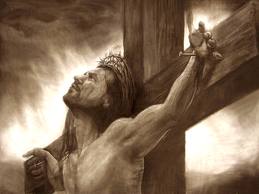
When should a sacrifice be used?
It depends on the specific case. If the story is about sacrifice–and the main character learns that he has to give himself up for others–then the climax will be a likely place for it to fit.
However, a story may not be about sacrifice, but sacrifice may still be part of it. In this case, it should be able to fit anywhere in the story–but it depends on the context.
A character could come to realize that he should be willing to sacrifice himself–not simply sacrificing others. As an example from one of my own novels, I (Robert) had a character come to a crossroads. He was a contestant in something like a bloodsport game. He was faced with a decision that had no turning back from–no second choice if he messed up. He could sacrifice himself for his friends–those he had come to know during the bloodsport–and in the process die himself. Or he could decide to let them be killed and go on himself. Out of love, he gave himself up. Both good and grief came from it, but ultimately it turned out to be the best decision for them all. If things had not turned out for good in his sacrifice, it would still have had no less meaning–life was the greatest thing he had. He had fought for it since he could walk. But then he had given up what he had coveted most for what he had found to be truly what was meaningful to him, his brethren around him.
Sacrifice doesn’t always have to result in death, although often it will. Self-sacrifice can be illustrated through characters just by patient service–being willing to die for something, or willing to live for it.
Therefore, I urge you, brothers and sisters, in view of God’s mercy, to offer your bodies as a living sacrifice, holy and pleasing to God—this is your true and proper worship.
-Romans 12:1 (NIV)
However, this doesn’t discount sacrifice to the point of death. Even to the extent of death, giving yourself up for God and devoting yourself to him is the greatest service possible.
Sacrifice is an expression of love–a great expression.
Greater love has no one than this: to lay down one’s life for one’s friends.
-John 15:13 (NIV)
So should all of your characters be regularly sacrificing themselves? It depends on the character. Some characters will have sacrificial love flowing out of them even in the smallest of manners. But some won’t.
However, having an overabundance of sacrifices can make it lose its value somewhat. Especially in a contemporary story, you probably can’t just kill too many characters off. But living sacrifices–your characters being willing to die for something, even if they don’t die–can be common. We don’t inspire others to sacrifice by writing about characters who don’t do it themselves.
In the case of a death sacrifice, if the character who had sacrificed himself comes back, there must be a good reason, else it will mean nothing. The sacrifice needs to have consequences–needs to affect something–otherwise it seems like a worthless sacrifice, just a plot element that the author needed to have happen but didn’t want to actually kill the character.
In some books–allegories especially–there will be a Christ figure. Someone who sacrifices themselves for the world. For example, Aslan from the Chronicles of Narnia is a clear Christ figure–he is the son of the Emperor-over-the-sea, and came to Narnia to sacrifice himself, so that redemption might come to those who needed it.
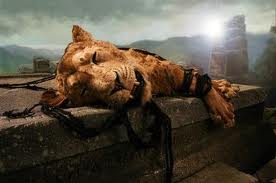
This is one of the highest privileges in this world–to be able to tell others of the sacrifice and resurrection of Jesus Christ. We need to make sure that we represent it clearly, so that people aren’t misled by our stories–fiction though they may be.
If you’re writing an allegory of Christ’s sacrifice and resurrection, make sure you check back to the Bible about what the core messages of Christ’s death are. It was out of love that Jesus gave himself up–not for his own sins. And he died that he might save all people.
In the case of a contemporary story, great sacrifices can still be made–even if not to death.
Then Jesus beholding him loved him, and said unto him, One thing thou lackest: go thy way, sell whatsoever thou hast, and give to the poor, and thou shalt have treasure in heaven: and come, take up the cross, and follow me.
-Mark 10:21 (KJV)
Wealth was the man’s greatest possession. He had lived a good life, obeyed all the commandments, but could not give but one final thing–his wealth. The greatest sacrifices lie in what matters most to someone. Your characters can sacrifice without having to die–and their sacrifice doesn’t have to be any less important for it.
We hope this helps for writing sacrifices in your own stories. Obviously, we can’t cover everything in one post. If you have any questions, feel free to post them and we’ll do our best to answer.
~Jag Swiftstorm and R. A. H. Thacker
Tuesday, September 17, 2013
That Wonderful Setting...

Why?
I hope you aren't wanting a short answer, because I'm just getting started.
Take, for example, this short scene.
"The City of Fardell, standing high upon a jag of rock, overlooks
the Hill of Caldune and the endless, mesmerizing forest, seemingly
only a mossy floor from a peak so high.
Darian cast his gaze elsewhere, unsettled at the sight of a heavy fog
stretching its snaking fingers across the earth. Above him, close enough
that he felt a simple raise of a hand would touch with the aether, were gloomy,
inky clouds, billowing and rumbling as they careened across the skies.
Small dragons, spiked on wings, back, head, limbs and covered in a thick
black hide sped across the darkening sky. Scree dragons by name, a small but
vicious and poison brood. They flocked over the city of Fardell, screeching
a high pitched wail.
What had brought so many as of late to Fardell was beyond anyone's guess,
nevertheless, there they were, and trouble like none before was brewing.
Brewing in the depths of the earth and reaches of the aether.
And then, the city heard them. The Aetherbrood."
What do we know about Fardell now? We know the names of surrounding locations, a bit about a species of dragons, and then, of course, we were left at a dead drop as to what these "Aetherbrood" are. But honestly, aside from the dragons and these strange other creatures, what does this world do to effect Darian, our main character? It doesn't change him - nor does it even look as though he could be possibly forced to change solely because of the setting. The key thing to this is that even if the "Aetherbrood" and these "Scree Dragons" are unique and special to Fardell, could this scene not take place in any other world, setting, or place? Maybe a few things would need to be changed - say, in a futuristic world the dragons would be some sort of a high-tech plain or drop ship, but what does it matter? This scene could easily, with only a few minor changes, be transported into a new - entirely different, even opposite - world.
The setting does not matter in something which could be swapped so easily. There is an exorbitant amount of simply useless and meaningless settings. Why? Because they don't effect the plot, they don't enhance the character, and they don't set a definite theme and mood to the story.
The key is that in any setting, be it Si-Fi, High Fantasy, Dystopian, Steampunk, even Historical-Fiction - the key is the setting and the character have to mesh. They have to compliment each other, and they have to click.
The setting and the character must give each other trouble. More specifically, the setting must create problems for the character, even if your not writing a Nature-vs-Man style plot. Some kind of conflict between character and setting, and a change in character because of the setting, must occur for the setting to be worth something. Otherwise, I don't care if I live on Pluto 9, where the grass is orange and people walk on their heads.
For example, from one of my historical-fiction novellas, my main character, Drustan, wants one thing he could never have, and no, there is never an exception, and yes, he always pursues the dream but can just never quite get there.
And that is because of the setting. Gaelic Ireland and Drustan mesh - even if they simultaneously clash. Or rather, they mesh because they clash. The setting matters to the story - it matters to Drustan. I couldn't just move him to an entirely new world with the snap of my fingers. Why? Because he's engraved in the setting, just as the setting is engraved in him.
That's what we want in a setting. We don't care if you've created two complete languages for the story, mapped out the world down to ever detail, we don't care, not if it doesn't matter to the plot and to the character, anyway. And the setting has to change the character, form him, and force him to grow.
So many stories simply ignore the setting. This needs to change.
~R. A. H. Thacker
Thursday, September 12, 2013
That Sweet, Bitter, Sad, Crying Moment...
When everything is ruined, when emotional strain peaked, your character does the unthinkable...
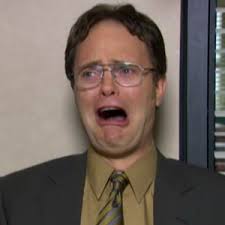
Most of all, we usually don't want our characters ending up like that man in the picture above, do we?
So display that moment of intense distress - but make it original, and think before letting a character shed tears.
~R. A. H. Thacker
He cries.
Call me weird, but I don't like cry scenes. And I know for a fact you'd be calling a lot of other people weird too if you called that weird.
Have you ever noticed how ineffective a crying moment can be? I know, all of us authors might be crying with the character. And sometimes, it's okay to have a character cry.
But crying... crying is about the worst physical way you can show your character is going through an emotional phase. Everyone cries. Just rarely enough to make it seem like some great thing to us authors, but it's very inexpressive - or, at least, much less than you could have it be. Live up to the scene's emotional intensity, reveal a habit in the character - make this his scene, not a weeping one.
That said, a moment or two is acceptable. But especially in a book, most of the time you're going to want to keep it to the absolute minimum.
While movies can get away with a crying scene a bit easier, we writers, we can't do that so well.
Most of all, we usually don't want our characters ending up like that man in the picture above, do we?
So display that moment of intense distress - but make it original, and think before letting a character shed tears.
~R. A. H. Thacker
Subscribe to:
Posts (Atom)